The Definitive Guide on How to Avoid Double Glazing Fogging
The phenomenon of internal condensation within an Insulated Glazing Unit (IGU)—frequently characterized by homeowners and facility managers as “fogging”—represents more than a mere aesthetic nuisance. It is a definitive signal of systemic failure within the building envelope. How to Avoid Double Glazing Fogging. When moisture penetrates the hermetically sealed space between two panes of glass, the unit’s thermal resistance (R-value) is compromised, and the structural integrity of the seal is effectively void. Understanding the mechanics of this failure is the first step in moving beyond reactive repairs toward a strategy of permanent prevention.
In the contemporary architectural landscape, double glazing is a foundational component of energy efficiency. However, the very technology that traps air or argon gas to provide insulation also creates a high-stakes environment for moisture management. The gap between the panes is designed to be bone-dry, maintained by a perimeter of desiccant-filled spacers. Once this internal environment is breached, the cycle of evaporation and condensation becomes a permanent resident, leading to mineral deposits that can etched the glass surface over time.
Preventing this outcome requires a multidisciplinary approach that begins at the point of manufacture and extends through decades of building maintenance. It involves a sophisticated understanding of “solar pumping,” drainage dynamics, and the chemical compatibility of sealants. This article serves as a definitive reference for those seeking to master the variables involved in glazing longevity. We will move past surface-level advice to interrogate the structural and environmental triggers that dictate whether a window remains clear for five years or fifty.
How to avoid double glazing fogging
To master the question of how to avoid double glazing fogging, one must first decouple the presence of moisture from the idea of “broken glass.” In the vast majority of cases, the glass is perfectly intact; it is the “dual-seal” system at the perimeter that has succumbed to the stresses of the environment. A common misunderstanding in the residential sector is that fogging is an inevitable byproduct of age. In reality, fogging is an indicator that the window’s drainage system has failed, allowing the bottom edge of the glass unit to sit in standing water—a condition known as “intermittent immersion” that no sealant can withstand indefinitely.
Achieving long-term clarity involves a shift in perspective: from viewing the window as a static object to viewing it as a dynamic pressure vessel. Throughout the day, as the sun hits the glass, the air or gas inside expands, exerting outward pressure on the seals. At night, the gas contracts, drawing the panes inward. This “solar pumping” occurs thousands of times over the life of the window. The “best” way to avoid fogging is to ensure that the primary and secondary sealants—usually polyisobutylene (PIB) and silicone or polysulfide—possess the elastic memory required to handle this constant movement without developing micro-fissures.
Oversimplification in this domain often leads to the neglect of “desiccant saturation.” Every IGU contains desiccant (silica gel or molecular sieve) hidden inside the spacer bar. Its job is to absorb the tiny amounts of water vapor that inevitably permeate the seals over decades. Once that desiccant is “full,” any further moisture ingress will manifest as fog. Therefore, the strategy for how to avoid double glazing fogging is essentially a strategy for extending the life of the desiccant by minimizing the moisture load on the secondary seal. This is achieved through proper glazing rebates, clear weep holes, and the avoidance of high-moisture interior environments.
Historical Context: The Evolution of the IGU
The concept of doubling glass to trap air dates back to the mid-19th century, but the modern “sealed unit” didn’t become a commercial reality until the 1930s with the introduction of “Thermopane.” Early versions often relied on lead spacers or even soldering the edges of the glass together. While these provided an excellent moisture barrier, they were too rigid; the glass often cracked because it couldn’t expand or contract with temperature changes.
The 1970s energy crisis accelerated the development of the “dual-seal” system we use today. This period saw the transition from single-seal units (which relied on a single bead of putty-like sealant) to the more robust multi-layered approach. The evolution has continued into the 21st century with the development of “warm-edge” spacers made of structural foam or plastic rather than aluminum. These modern spacers reduce the thermal bridge at the edge of the glass, which in turn reduces the localized condensation that can accelerate seal rot.
Conceptual Frameworks and Mental Models
When evaluating glazing plans, professionals utilize these mental models to predict longevity:
-
The “Boat in the Moat” Framework: This model views the IGU as a boat sitting in a frame (the moat). If the moat’s drainage (weep holes) is blocked, the boat’s hull (the seals) will eventually rot. Longevity is a function of drainage, not just seal strength.
-
The Solar Pumping Arc: A visualization of the daily expansion and contraction cycle. This model reminds us that the “stickiness” of a sealant is less important than its “elasticity.”
-
The Desiccant Life-Clock: Every window is born with a finite capacity to manage moisture. The goal of maintenance is to slow the “ticking” of this clock by reducing external vapor pressure.
Critical Variations in Sealant and Spacer Technology
The materials used in the perimeter of a window dictate its failure date. Selecting the right combination is the most proactive step in avoiding fogging.
| Technology | Material | Trade-off | Expected Lifespan |
| Aluminum Spacer | High-grade Aluminum | High thermal transfer; prone to condensation at edges. | 15–25 Years |
| Warm-Edge Spacer | Stainless Steel/Plastic | Better thermal performance; slightly higher cost. | 25–35 Years |
| Structural Foam | Silicone Foam | Best thermal performance; requires expert application. | 30+ Years |
| Dual-Seal (PIB/Silicone) | Polyisobutylene & Silicone | Excellent UV resistance; high cost. | Long-term |
| Hot-Melt Butyl | Single-component resin | Low cost; prone to softening in high heat. | 10–15 Years |
Detailed Real-World Scenarios How to Avoid Double Glazing Fogging
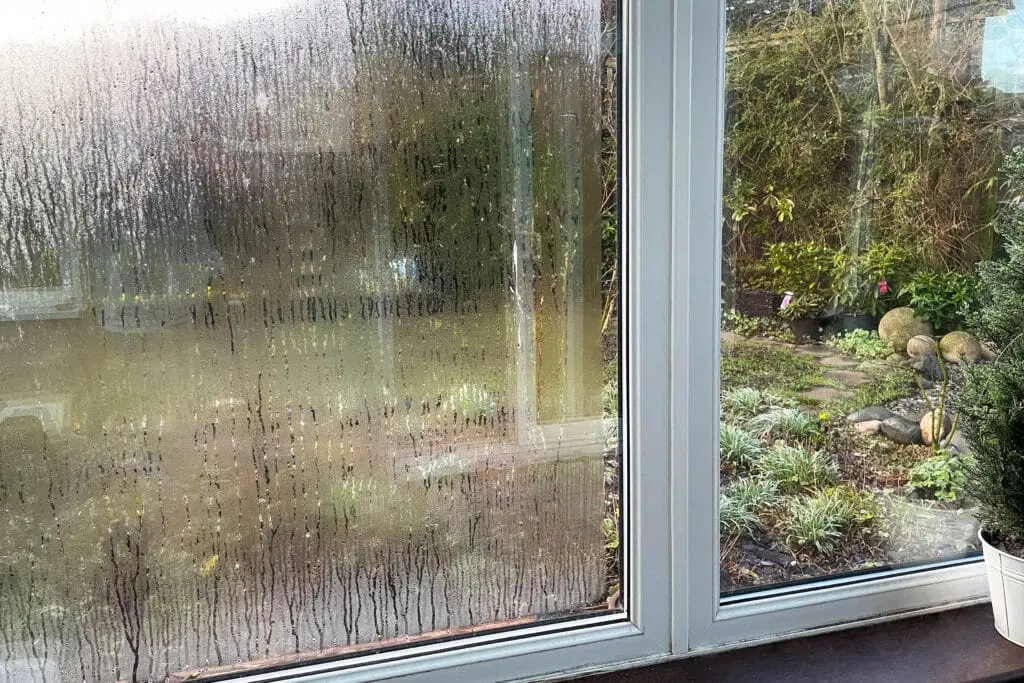
Scenario A: The High-Humidity Kitchen
In environments with constant cooking and steam, the interior vapor pressure is significantly higher than the exterior. The failure here is not the window seal itself, but the interior room-side seal.
Scenario B: The Southern Elevation Exposure
Windows on the south side of a building experience the most extreme solar pumping. The temperature of the glass can reach 140°F (60°C). If the unit uses a “hot-melt” sealant, that sealant can actually soften and migrate, creating a gap. For these exposures, a high-modulus silicone secondary seal is mandatory.
Planning, Cost, and Resource Dynamics
The economic impact of preventing fogging is realized through “avoided replacement.” While a high-performance IGU may cost 20% more upfront, the labor cost of replacing a failed unit ten years later often exceeds the original cost of the entire window.
| Resource | Direct Cost Influence | Variability Factor |
| Argon Gas Fill | Low | Improves R-value, requires better seals. |
| Secondary Sealant | Moderate | Silicone vs. Polysulfide vs. Polyurethane. |
| Glazing Labor | High | Precision of “blocking” and weep hole clearing. |
| Maintenance | Low | Cost of periodic cleaning and seal inspection. |
Tools, Strategies, and Support Systems
-
Thermography: Using infrared cameras to detect cold spots at the edge of the glass, which can indicate the early stages of seal failure or gas loss.
-
Hygrometers: Measuring interior humidity to ensure it stays below 40% in winter, reducing the “vapor drive” on the window seals.
-
Compatible Sealants: Ensuring that any “caulk” used around the window is chemically compatible with the IGU’s secondary seal to prevent “chemical attack” and softening.
Risk Landscape and Failure Modes
The primary failure mode for modern double glazing is Capillary Action. If the gap between the glass and the frame is too narrow, water can be “sucked” upward against gravity, where it sits against the seals.
Another compounding risk is “Glass Deflection.” In very large or very thin IGUs, the glass can bow inward until the two panes touch in the center. This creates a “thermal bridge” and puts extreme stress on the perimeter seals, leading to premature fogging. Proper “aspect ratios” in the design phase are critical to avoiding this mechanical failure.
Governance, Maintenance, and Long-Term Adaptation
A “set and forget” mentality is the primary reason for early window failure. Governance of the building envelope requires a structured review cycle.
The Layered Maintenance Checklist:
-
Visual Perimeter Audit: Check for “fogging” at the very edges of the glass, which usually precedes center-pane fogging by 12–24 months.
-
Drainage Verification: Pour a small amount of water into the window track to ensure it exits through the weep holes in less than 30 seconds.
-
Gasket Integrity: Ensure the rubber gaskets are not “creeping” or shrinking away from the corners, which allows water into the rebate.
Measurement, Tracking, and Evaluation
-
Leading Indicators: Changes in internal humidity levels; visible condensation on the exterior surface (which is actually a sign of good thermal performance).
-
Lagging Indicators: Visible “clouding” or “staining” between the panes; higher energy bills due to lost insulation value.
-
Documentation: Maintain a “Glazing Log” that records the manufacture date and sealant type for every unit. This allows for warranty claims and helps identify “bad batches” from specific manufacturers.
Common Misconceptions and Industry Myths
-
“Fogging means the glass is cracked.” False. It means the seal is breached.
-
“You can ‘drill and dry’ a foggy window.” While some companies offer this, it is a temporary cosmetic fix. It does not restore the insulating gas or the structural seal.
-
“Triple glazing lasts longer.” Often the opposite is true; the extra weight and the third seal create more points of potential failure.
-
“Condensation on the outside is a problem.” No, this means your windows are working perfectly, keeping the heat inside so the outer pane stays cold.
Conclusion
The quest for how to avoid double glazing fogging is ultimately a quest for architectural permanence. As building codes demand higher thermal performance, the stress placed on Insulated Glazing Units will only increase. Success lies in the invisible details: the quality of the primary seal, the cleanliness of the drainage weep holes, and the management of interior humidity. By treating the window as a high-performance mechanical assembly rather than a passive piece of glass, we can ensure that the transition to a clear view remains uninterrupted for the life of the building. The clearest window is not just a product of the factory, but a result of informed design and disciplined stewardship.