Definitive Engineering Guide: Top Motorized Glass Roof Plans
The integration of kinetic elements into the building envelope represents one of the most significant shifts in contemporary residential and commercial architecture. Among these, the motorized glass roof stands as a pinnacle of engineering, promising a seamless transition between the controlled interior and the organic exterior. Definitive Engineering Guide. However, the move from a static skylight to a retractable structural system introduces a host of mechanical complexities that go far beyond traditional glazing. It is an exercise in managing the physics of motion while maintaining the uncompromising requirements of a weather-tight thermal barrier.
Developing a robust set of top motorized glass roof plans requires a deep understanding of structural kinematics—the study of motion without regard to the forces that cause it. When a roof becomes mobile, it must be able to withstand the same wind, snow, and dead loads as a fixed roof, yet remain light enough for a motor to actuate without excessive wear. This balance is achieved through high-precision aluminum or steel extrusions, specialized gear-driven tracks, and the strategic application of laminated, high-performance glass.
The planning phase for these systems is often where the difference between long-term success and systemic failure is determined. A plan must account for not only the aesthetics of the glass but the hidden infrastructure: the drainage paths that remain functional during the opening cycle, the fail-safe sensors that prevent closure on an obstruction, and the structural reinforcement of the building’s primary frame to handle the localized torque of a moving glass assembly. This article provides a definitive exploration of the technical parameters and strategic considerations essential for evaluating high-performance retractable glazing systems.
top motorized glass roof plans
To properly evaluate the top motorized glass roof plans, one must recognize that the “roof” is actually a machine. A common misunderstanding in the design phase is treating the retractable glass as a simple sliding window on a larger scale. In reality, the gravity loads of a horizontal or pitched roof create friction forces that do not exist in vertical applications. The plans must, therefore, prioritize the “coefficient of friction” and the “torque-to-weight ratio” of the motor drive to ensure smooth operation over decades of use.
Oversimplification in these plans often manifests as a neglect of the “seal transition.” When a motorized roof is closed, it must achieve a hermetic seal; when it is in motion, those seals must disengage or slide without tearing. High-quality plans specify specialized EPDM (ethylene propylene diene monomer) gaskets or magnetic seals that can withstand UV exposure and thousands of cycles of compression and release. If the plan focuses only on the motor and the glass, the result is often a system that leaks air and water within its first two years of operation.
Furthermore, a comprehensive plan integrates the system into the building’s broader environmental controls. This means the motorized roof should not be a standalone gadget but a part of the “thermal chimney” effect, where sensors trigger the opening of the roof to flush hot air out of a building during the summer nights. Mastery of these plans involves looking at the mechanical assembly as a dynamic participant in the building’s energy performance rather than a static architectural feature.
Deep Contextual Background: From Atriums to Kinetic Envelopes
The lineage of the glass roof traces back to the Victorian orangeries and the grand iron-and-glass structures of the industrial revolution, such as the Crystal Palace. However, these were static structures. The desire for motion began in the mid-20th century with stadium-scale retractable roofs, which eventually trickled down to high-end residential and hospitality architecture as materials became lighter and more durable.
The evolution of the motorized roof was driven largely by advancements in aerospace-grade aluminum and low-friction polymer bearings. Early attempts at retractable roofs often relied on heavy steel and industrial chains, which were prone to rust and catastrophic failure. Today’s systems utilize “dry-running” tracks that require no grease, reducing maintenance and preventing the unsightly buildup of dirt and debris in the mechanism. This shift has allowed for more delicate profiles, making the motorized roof an option for modern minimalist designs where “heavy” hardware would be an aesthetic dealbreaker.
Conceptual Frameworks and Mental Models
When analyzing or designing a motorized glass system, professionals use these frameworks to manage complexity:
-
The “Zero-Tolerance” Friction Model: This model assumes that any friction in the track will eventually lead to motor burnout. It prioritizes perfectly aligned rails and high-precision rollers as the most critical structural components.
-
The Dynamic Load Transfer Path: Unlike a static roof, a moving roof shifts its weight as it opens. This framework analyzes the building’s support structure to ensure it can handle the “moving point loads” without flexing, which would bind the glass panels.
-
The “Passive-Active” Safety Loop: This model integrates physical safety (laminated glass that won’t fall if broken) with active electronic safety (infrared beams or pressure-sensitive edges that stop the motor if an obstruction is detected).
Key Categories and Variations
Selecting from the top motorized glass roof plans requires understanding the specific motion profile that fits the architectural site.
1. Telescopic Sliding Systems
These are the most common for large expanses. Multiple panels slide over one another and stack at one end. This maximizes the open area but requires a “parking zone” that can support the stacked weight of multiple glass lites.
2. Pivoting/Louvered Glass Systems
Individual glass planks rotate on a central axis. While they provide excellent ventilation and can be tuned for solar shading, they do not provide a 100% “sky-view” opening since the glass remains over the space.
3. Retractable Lean-to Systems
Often used for enclosures that attach to an existing wall. The roof sections slide up toward the wall. These are mechanically simpler but require a very strong “header” beam on the building facade.
4. Bi-Parting Sliding Systems
Panels slide away from a center ridge to two opposite sides. This is often the most balanced system structurally, as the loads are distributed evenly across two sides of the building.
Comparison of Motion Profiles
| System Type | Maximum Open Area | Mechanical Complexity | Structural Load Requirement |
| Telescopic | 75% – 85% | High | High (Stacking Load) |
| Louvered | 0% (Ventilation only) | Moderate | Low |
| Lean-to | 50% – 66% | Moderate | Moderate |
| Bi-Parting | 75% | Moderate | Balanced |
Detailed Real-World Scenarios Definitive Engineering Guide
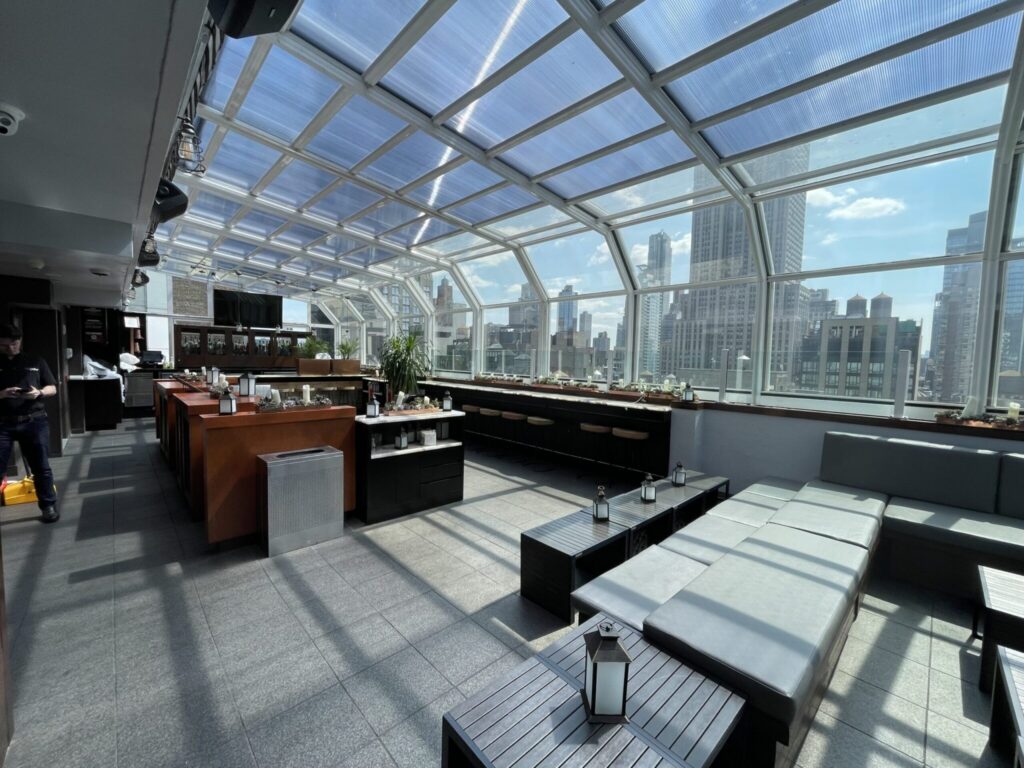
Scenario A: The Coastal Rooftop Lounge
In this environment, salt-air corrosion is the primary failure mode. The top motorized glass roof plans for this site must specify marine-grade stainless steel hardware and “pre-anodized” aluminum. A common failure in coastal zones is “pitting” in the tracks, which eventually causes the rollers to seize.
Scenario B: The High-Altitude Snow Zone
Weight is the enemy here. A motorized roof must be able to sense the weight of snow and refuse to open if the load exceeds the motor’s torque capacity. The plan should include “heat-trace” cables in the gutters to prevent ice dams from blocking the panels’ movement paths.
Planning, Cost, and Resource Dynamics
The economic investment in a motorized glass roof is significant, with costs scaling exponentially based on the “clear span”—the distance the glass must bridge without support.
| Cost Component | Relative Impact | Variability Factor |
| Glass Substrate | 30% | Tinted, Low-E, or Smart-Glass |
| Actuation System | 25% | Motor wattage and redundancy |
| Structural Frame | 25% | Custom extrusions vs. standard |
| Installation | 20% | Crane access and high-altitude work |
Tools, Strategies, and Support Systems
A successful implementation relies on several supporting technologies:
-
PLC (Programmable Logic Controllers): To synchronize multiple motors so the roof doesn’t “rack” or twist during motion.
-
Weather Stations: Integrated wind and rain sensors that automatically close the roof at the first sign of a storm.
-
UPS (Uninterruptible Power Supply): Ensures the roof can be closed even during a power failure, a critical safety feature for residential homes.
-
Brush-Strip Seals: Used to sweep debris off the tracks as the roof moves, preventing jamming.
Risk Landscape and Failure Modes
The primary taxonomy of risk in motorized glass roofs involves:
-
Mechanical Binding: Often caused by building settlement. If the building shifts by even 5mm, the tracks may no longer be parallel, causing the motor to stall.
-
Seal Degradation: UV rays are particularly harsh on horizontal surfaces. If the seals are not replaced every 7–10 years, the system will leak.
-
Sensor Drift: Over time, the “limit switches” that tell the motor when to stop can drift, leading to the panels slamming into the frame.
Governance, Maintenance, and Long-Term Adaptation
A motorized roof requires a “governance” approach to maintenance, treating it like a vehicle rather than a part of the house.
Layered Maintenance Checklist:
-
Quarterly Track Cleaning: Removal of leaves, grit, and spider webs.
-
Semi-Annual Lubrication: Only on specific non-polymer parts as dictated by the manufacturer.
-
Annual Gasket Inspection: Checking for “compression set”—where the rubber loses its bounce.
Measurement, Tracking, and Evaluation
Performance can be tracked through several indicators:
-
Amperage Draw: Monitoring how much power the motor pulls. A spike in amperage indicates increased friction and an impending mechanical failure.
-
Cycle Count: Many modern controllers track the number of “opens” and “closes,” triggering a service light after a set amount of usage.
-
Acoustic Signature: A change in the sound of the motor (grinding or whining) is a leading indicator of bearing wear.
Common Misconceptions
-
“Motorized roofs are only for warm climates.” Actually, high-performance units are designed with “thermal breaks” and triple-glazing to perform excellently in cold climates.
-
“They are too loud.” Modern DC brushless motors and nylon rollers are virtually silent.
-
“If the power goes out, I’m stuck.” All top motorized glass roof plans should include a manual override or a battery backup.
Conclusion
The successful deployment of a motorized glass roof is a testament to the marriage of architectural vision and mechanical precision. It is a system that demands a higher level of intellectual honesty during the planning phase than almost any other building component. By respecting the physics of motion, the volatility of the weather, and the necessity of long-term maintenance, architects and owners can create spaces that are truly transformative. The value of these systems lies not just in the luxury of an open sky, but in the sophisticated engineering that makes that luxury reliable, safe, and enduring.