Vertical Envelope: Best Solar Control Glazing for Skyscraper
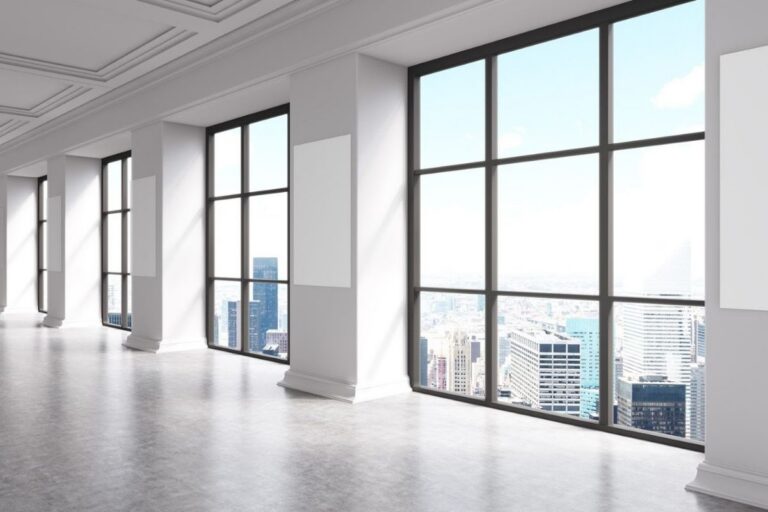
The modern skyscraper is, in many ways, an environmental paradox. It seeks to maximize human density and access to natural light while occupying an atmospheric zone where solar radiation and wind speeds are at their most aggressive. Best Solar Control Glazing for Skyscraper. As building heights increase, the glass envelope ceases to be a mere aesthetic skin and becomes the primary engine of the structure’s energy metabolism. In a high-rise context, the “greenhouse effect” is not a theoretical concept but a daily operational reality that can dictate the difference between a high-performing asset and a thermal liability.
Selecting the appropriate glass involves navigating a high-stakes intersection of material science, optical physics, and economic forecasting. The challenges are compounded by the scale of the application; a marginal error in the Solar Heat Gain Coefficient (SHGC) that might be negligible in a low-rise building becomes an exponential problem when multiplied across 50,000 square meters of a tower’s facade. The goal is no longer just transparency, but “selective” transparency—the ability to allow visible light into a space while strictly rejecting the near-infrared spectrum that carries heat.
The evolution of thin-film coatings has provided architects with an unprecedented palette of solutions, yet this abundance brings a new layer of complexity. Modern glazing specifications must account for color consistency across thousands of panes, the risk of thermal stress breakage in unshaded elevations, and the long-term degradation of complex laminated interlayers. This article serves as a definitive exploration of the technical parameters and strategic frameworks required to evaluate and implement the most effective solar control solutions for the vertical built environment.
best solar control glazing for skyscrapers
To identify the best solar control glazing for skyscrapers, one must first decouple the concept of “performance” from simple thermal resistance. In a high-rise, solar control is fundamentally about managing the “Light to Solar Gain” (LSG) ratio. A high LSG means the glass allows plenty of natural light while blocking heat, a balance that is essential for occupant well-being and reducing artificial lighting loads without overwhelming the HVAC system.
A common misunderstanding in skyscraper design is the over-reliance on “tinted” glass. While body-tinted glass can reduce heat gain, it does so by absorbing solar energy into the glass itself. In the thin air and intense sunlight of upper-story elevations, this absorbed heat can cause the glass to expand significantly, leading to thermal stress fractures if the edges are not perfectly polished. The superior alternative—and the focus of high-performance plans—is vacuum-deposited “soft-coat” Low-E technology. These coatings reflect heat rather than absorbing it, keeping the energy outside the building envelope entirely.
The risk of oversimplification often lies in ignoring “angle of incidence.” Laboratory ratings for glass are typically measured at a 90-degree angle, but for the majority of the day, a skyscraper is hit by sunlight at acute angles. The “best” glazing solution is one that maintains its solar rejection properties and its visual color (the “color shift”) even when viewed from the street at a sharp upward angle. Without accounting for these multi-perspective dynamics, a tower that looks beautiful on a sample board can appear inconsistent and patchy once installed.
Deep Contextual Background: The Evolution of Thermal Management
The history of high-rise glazing is a transition from mass to film. Early skyscrapers relied on masonry with small “punched” windows, where the thermal mass of the wall provided a natural buffer. The post-war shift to the “curtain wall” moved the entire thermal burden onto the glass. Initially, this led to buildings that were essentially un-insulatable, relying on massive, inefficient chillers to counter the solar radiation trapped by single-pane clear glass.
The 1970s energy crisis catalyzed the development of “hard-coat” pyrolytic glass, where a metallic oxide was baked into the glass surface. While durable, these were limited in their selectivity. The true revolution occurred with the advent of Magnetron Sputter Vacuum Deposition (MSVD). This allowed for the application of “triple-silver” coatings—layers of silver molecules so thin they are measured in nanometers, sandwiched between dielectric layers. This technology is what enables the current generation of ultra-clear towers to meet stringent modern energy codes.
Conceptual Frameworks and Mental Models
Professionals utilize several mental models to navigate the complexity of solar glazing:
-
The “Selectivity Filter” Model: Viewing the glass as a high-frequency filter that distinguishes between the Visible Light Spectrum (380–780nm) and the Near-Infrared Spectrum (780–2500nm).
-
The “Boundary Layer” Framework: Understanding that the glass is just one part of a system that includes the air-space between panes and the thermal break in the aluminum frame.
-
The “Occupant Proximity” Model: Prioritizing the “mean radiant temperature” near the window. If the glass feels hot to the touch, the HVAC system cannot prevent occupant discomfort, regardless of the air temperature.
Key Categories and Variations
Solar control for skyscrapers generally segments into several specialized technological paths, each with specific trade-offs.
1. Triple-Silver Low-E (Soft Coat)
The current industry standard for high-performance towers. It provides an LSG ratio often exceeding 2.0. The trade-off is that these coatings are delicate and must be hermetically sealed inside an Insulated Glazing Unit (IGU).
2. Double-Silver (Mid-Range)
Offers a balance of cost and performance. While it rejects less heat than triple-silver, it is often easier to process and has fewer issues with “visual haze” when viewed at extreme angles.
3. Reflective and Semi-Reflective
Utilizes chromium or other metals to create a mirror effect. While highly effective at solar rejection, many modern urban codes discourage their use due to “light pollution” and the danger they pose to avian life.
4. Dynamic/Electrochromic Glazing
Glass that tints electronically based on sensor input. While technically the “best” at adapting to changing conditions, the high capital cost and need for complex wiring often limit its use to “prestige” zones of a tower.
Comparison of Performance Metrics
| Coating Type | Visible Light Transmittance (VLT) | Solar Heat Gain (SHGC) | LSG Ratio |
| Single-Silver | 60% – 70% | 0.40 – 0.45 | 1.4 – 1.5 |
| Double-Silver | 50% – 65% | 0.28 – 0.35 | 1.7 – 1.9 |
| Triple-Silver | 45% – 60% | 0.20 – 0.25 | 2.1 – 2.4 |
| Electrochromic (Clear State) | 60% | 0.40 | 1.5 |
| Electrochromic (Tinted State) | 1% | 0.09 | 0.1 |
Detailed Real-World Scenarios Best Solar Control Glazing for Skyscraper
Scenario A: The “Heat Island” Urban Center
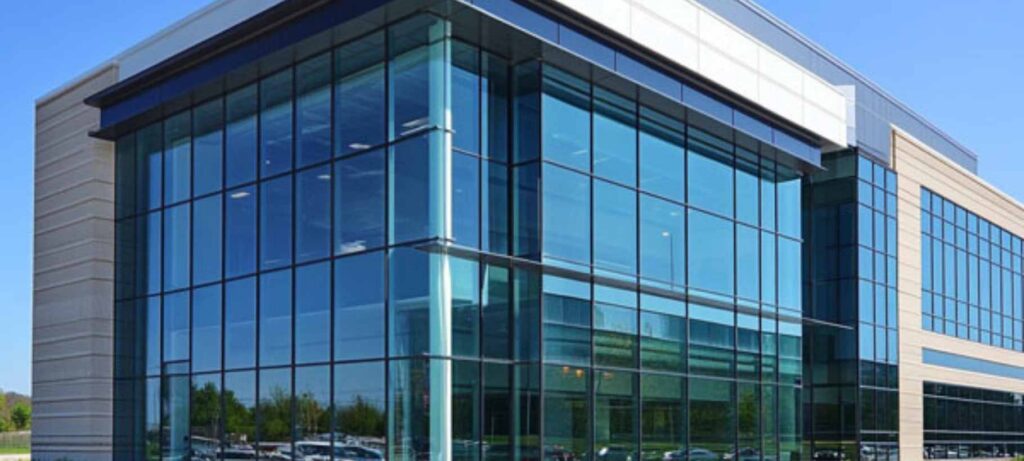
In a dense city like Singapore or New York, the glass must account for “reflected heat” from neighboring buildings. Here, the best solar control glazing for skyscrapers involves a coating on the #2 surface (inside of the outer pane) with a low “external reflectance” to avoid blinding drivers, combined with a high solar rejection to handle the ambient urban heat.
Scenario B: The High-Altitude Mountain Tower
At high altitudes, the UV radiation is significantly more intense. Standard coatings may degrade faster, and the extreme temperature swings between day and night increase the risk of seal failure in IGUs. The solution here often involves “heat-strengthened” glass substrates with specialized edge-seals.
Planning, Cost, and Resource Dynamics
The financial planning for high-rise glazing must account for the “total lifecycle” cost. While triple-silver glass may carry a 15-20% premium over double-silver, the reduction in required chiller capacity can often pay for the glass before the building is even occupied.
| Cost Driver | Influence on Budget | Variability |
| Silver Layers | High | Market price of precious metals |
| Glass Substrate | Moderate | Clear vs. Low-Iron (Starphire) |
| Processing | Moderate | Tempering and Heat Soaking requirements |
| Logistics | High | Crane time and storage on constrained sites |
Risk Landscape and Failure Modes
-
Spontaneous Breakage: Usually caused by Nickel Sulfide (NiS) inclusions. In a skyscraper, a falling pane is a life-safety issue, necessitating mandatory “Heat Soak Testing.”
-
Secondary Reflection (The “Death Ray” Effect): If the glass is too concave due to pressure changes in the IGU, it can focus sunlight onto neighboring buildings, causing damage.
-
Coating Oxidation: If the IGU seal fails, the soft-coat silver will oxidize and turn black, requiring a full panel replacement.
Governance and Maintenance
A skyscraper facade is a 50-year asset that requires a governance structure. This includes:
-
Annual Thermographic Audits: Using infrared cameras to detect panels that have lost their insulating gas.
-
Strict Cleaning Protocols: Using deionized water to prevent mineral buildup on the outer surface, which can interfere with the glass’s optical properties.
-
Sealant Monitoring: Checking the structural silicone that holds the glass to the frame for UV degradation.
Common Misconceptions
-
“Low-E glass makes the building look dark.” Modern coatings are so selective that they can maintain 70% light transmission while blocking 60% of the heat.
-
“Argon gas stays in the window forever.” Standard units lose about 1% of their gas fill per year; long-term performance must be modeled with this “leakage” in mind.
-
“Double-pane is enough for any climate.” In extreme environments, “Triple-Glazed” units with two Low-E coatings are becoming the new baseline for sustainability.
Conclusion
The pursuit of the best solar control glazing for skyscrapers is an ongoing negotiation between the laws of physics and the vision of the architect. As we push buildings higher and seek to make them carbon-neutral, the role of the glass envelope will only become more critical. The most successful projects are those that view glass not as a commodity, but as a high-precision filter—one that harmonizes the interior environment with the celestial and atmospheric forces outside. In the vertical city, the glass is the first line of defense and the primary tool for human comfort.