Definitive Guide to Top Insulated Glazing Unit Options Architecture
The evolution of building envelopes has moved far beyond the simple pursuit of transparency. Modern fenestration is now a high-stakes engineering challenge where thermal performance, acoustic attenuation, and structural integrity must coexist within a few millimeters of glass and gas. Top Insulated Glazing Unit Options. As energy codes tighten globally and the demand for occupant comfort rises, the selection of glazing is no longer a peripheral architectural choice but a central pillar of building science.
Navigating the landscape of top insulated glazing unit options requires an understanding of how distinct components—glass substrates, spacer technology, gas fills, and thin-film coatings—interact under varying environmental loads. A failure to account for these interactions often leads to systemic issues, such as seal failure, permanent deflection, or unintended thermal bridging, which can compromise a structure’s longevity.
This analysis examines the technical nuances and decision-making frameworks necessary to evaluate high-performance glazing. By moving past surface-level marketing specifications, we can explore the physics of heat transfer and the material science that defines the current state of the industry.
Understanding top insulated glazing unit options
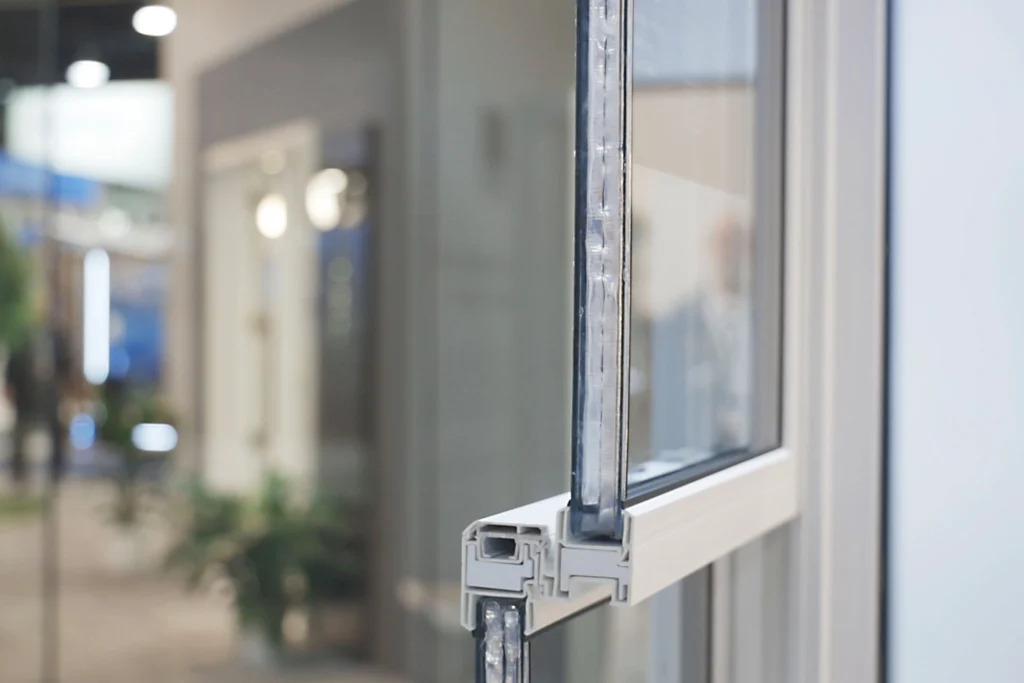
Selecting the top insulated glazing unit options is rarely about finding a single “best” product. Instead, it involves optimizing a complex set of variables to meet specific site conditions. An Insulated Glazing Unit (IGU) is essentially a hermetically sealed sandwich of two or more lites of glass separated by a spacer and a column of air or noble gas. While the concept is simple, the execution is a delicate balance of internal pressure and external environmental stress.
One common misunderstanding is that a lower U-value—the measure of heat transfer—is the only metric that matters. While thermal resistance is critical, focusing solely on it can lead to “over-specification,” where the glass becomes so heavy or thick that it requires prohibitively expensive framing or limits natural light to the point of impacting inhabitant well-being. Furthermore, the solar heat gain coefficient (SHGC) must be tuned to the climate; a high-performance unit in a heating-dominated climate like Montreal will look fundamentally different from one designed for the cooling loads of Dubai.
The risk of oversimplification often lies in ignoring the “edge of glass” performance. A center-of-glass U-value may look impressive on a datasheet, but if the spacer technology is outdated, the perimeter of the window will remain a thermal weak point, leading to condensation and eventual mold growth. True topical mastery in this field requires looking at the IGU as a holistic system rather than a collection of independent parts.
Deep Contextual Background: The Systemic Evolution
The transition from single-pane glass to the multi-layered systems we see today was driven by the energy crises of the 1970s and subsequent leaps in chemical engineering. Early IGUs were rudimentary, often suffering from “fogging” as moisture breached the primary seals. The introduction of metallic Low-Emissivity (Low-E) coatings in the 1980s changed the trajectory of the industry, allowing glass to reflect infrared radiation while remaining transparent to visible light.
We have moved from “dual-pane” being a luxury to it being a baseline requirement, with triple and even vacuum-insulated glazing (VIG) representing the current frontier. This evolution is not just about adding more layers; it is about the refinement of the “interlayer” space. The shift from aluminum spacers—which acted as thermal superhighways for heat loss—to “warm-edge” spacers made of stainless steel or structural foam represents a significant milestone in reducing localized thermal bridging.
Conceptual Frameworks and Mental Models
To evaluate the top insulated glazing unit options, professionals often use specific mental models to weigh competing priorities:
-
The Thermal Envelope Synergy: This model views the IGU not as a hole in the wall, but as a dynamic part of the insulation layer. If the glass outperforms the wall, you’ve wasted money; if it underperforms significantly, you’ve created a comfort gap.
-
The “Vulnerability-at-the-Seal” Model: This framework prioritizes the longevity of the hermetic seal over the initial R-value. It posits that a slightly less efficient unit that lasts 40 years is superior to a hyper-efficient unit that fails in 15.
-
The Climate-Responsive Filter: This treats glass as a valve rather than a wall. It asks: does this unit need to harvest heat (passive solar) or reject it (solar control)?
Key Categories and Technical Variations
When considering the top insulated glazing unit options, the industry generally segments choices by the number of glass lites and the specialized technology used within the cavity.
1. High-Performance Double Glazing
The workhorse of modern architecture. It utilizes one Low-E coating and argon gas. Its primary trade-off is its limit in extreme cold, where the center-of-glass temperature may still drop low enough to cause occupant discomfort.
2. Triple Glazing (Triple-Pane)
Adds a third lite of glass and a second insulating cavity. While it offers superior U-values, the added weight requires beefier hardware and more robust structural framing.
3. Vacuum Insulated Glazing (VIG)
A burgeoning technology where the air is completely removed from a tiny gap (often only 0.2mm). It offers the performance of triple glazing in the thickness of a single pane but remains expensive and sensitive to “pillar” visibility—small spacers that keep the glass from collapsing under atmospheric pressure.
4. Thin-Glass Triple IGUs
A hybrid approach using a very thin (1mm) center lite of glass. This reduces weight while maintaining the thermal benefits of two cavities, though manufacturing at scale is still catching up to demand.
5. Suspended Film IGUs (e.g., Heat Mirror)
Instead of a third lite of glass, a high-performance film is stretched inside the cavity. This provides multiple “chambers” without the weight of glass, though historical concerns about film degradation have made some specifiers cautious.
Comparison of Performance Metrics
| Unit Type | Typical U-Value (IP) | Weight (lbs/sqft) | Primary Benefit |
| Standard Double | 0.24 – 0.30 | 6.0 | Cost-effective, lightweight |
| High-Performance Triple | 0.10 – 0.15 | 9.0 | Extreme thermal comfort |
| Vacuum Insulated (VIG) | 0.07 – 0.12 | 3.5 | Retrofit capability, thin profile |
| Thin-Glass Triple | 0.12 – 0.16 | 7.0 | Weight/Performance balance |
Detailed Real-World Scenarios Top Insulated Glazing Unit Options
Scenario A: High-Rise Urban Residential (Wind Loads)
In a 40-story tower, wind pressure is a dominant factor. Selecting a triple-pane IGU might seem ideal for energy, but the “deflection” of the glass under wind loads can cause the panes to touch or the seals to fail. Here, heat-strengthened glass and wider spacers are necessary, often necessitating a compromise in absolute thermal value to ensure structural safety.
Scenario B: Desert Commercial Facility (Solar Control)
Thermal insulation is less important here than the Solar Heat Gain Coefficient (SHGC). The top choice involves a “triple-silver” Low-E coating on the #2 surface (inside of the outer lite) to reflect heat before it even enters the IGU cavity. Failure to do this results in a “greenhouse effect” that no HVAC system can economically counter.
Planning, Cost, and Resource Dynamics
The financial reality of the top insulated glazing unit options extends beyond the purchase price. Direct costs include the glass and the specialized gas fills (Krypton is significantly more expensive than Argon). Indirect costs include the heavy-duty cranes needed to install triple-pane units and the increased structural reinforcement of the building’s skeleton.
| Cost Component | Relative Impact | Range (Estimated %) |
| Glass Substrate | Moderate | 20% – 30% |
| Gas Fill (Argon vs Krypton) | Variable | 5% – 15% |
| Fabrication/Sealing | High | 30% – 40% |
| Installation Labor | High | 20% – 50% |
Risk Landscape and Failure Modes
The primary enemy of any IGU is thermal stress breakage. If one part of the glass is in deep shadow while the rest is in direct sun, the temperature differential can crack the lite. Additionally, gas dissipation is an invisible failure; if the Argon leaks out over 10 years, the unit’s performance can drop by 20% without the owner ever knowing, until condensation appears.
Another compounding risk is chemical fogging. This occurs when low-quality sealants outgas into the cavity, leaving a permanent haze on the internal surfaces. Once this happens, the unit is effectively dead and must be replaced.
Governance, Maintenance, and Long-Term Adaptation
Long-term performance requires a structured review cycle. For large-scale installations, thermal imaging (thermography) every five years can identify units that have lost their gas fill or suffered seal failure.
Maintenance Checklist:
-
Seal Inspection: Check for brittle or cracking perimeter sealants.
-
Weep Hole Clearance: Ensure frames drain water away from the IGU edge.
-
Desiccant Satiation: Watch for internal “fog” during first frosts, indicating the desiccant can no longer absorb moisture.
Common Misconceptions
-
“More space between panes is always better.” Actually, if the gap exceeds about 18mm, convective loops form within the gas, actually increasing heat transfer.
-
“Low-E glass is tinted glass.” Modern coatings are virtually invisible; “tint” is a function of the glass substrate or a separate dye, not the thermal coating itself.
-
“Argon lasts forever.” High-quality units lose about 0.5% to 1% of their gas per year. After 20 years, performance will be lower than day one.
Conclusion
The selection of the top insulated glazing unit options is a sophisticated exercise in balancing transparency with thermal physics. As the industry moves toward “quad-pane” and advanced vacuum technologies, the focus remains on the integrity of the system. A definitive choice requires looking past the immediate aesthetic to the long-term interaction between the building, its inhabitants, and the environment. Mastery of these options ensures that the glass remains an asset to the structure’s performance rather than a liability in its energy budget.