Strategic Financial Optimization: How to Reduce Acoustic Glazing Cost
The pervasive nature of urban noise pollution—ranging from the low-frequency thrum of transit systems to the high-frequency intrusion of aircraft—has elevated acoustic glazing from a luxury specification to a fundamental requirement of the modern building envelope. However, the fiscal barrier to high-performance sound insulation remains a primary point of friction for developers and homeowners alike. How to Reduce Acoustic Glazing Cost. Acoustic glazing is not merely “thicker glass”; it is a sophisticated structural assembly designed to disrupt sound wave transmission through mass, dampening, and decoupling.
As architectural trends favor expansive glass facades and open-plan interiors, the mechanical burden on the window system increases. The pursuit of silence often leads to a cycle of over-specification, where stakeholders select the highest Sound Transmission Class (STC) ratings without considering the law of diminishing returns or the specific frequency of the offending noise. This lack of strategic calibration results in inflated budgets that do not necessarily correlate with perceived acoustic comfort.
A rigorous interrogation of the acoustic supply chain and the underlying physics of glass vibration reveals significant opportunities for fiscal optimization. To manage these expenditures effectively, one must move beyond the per-square-foot cost and examine the system as a whole. This involves a granular analysis of glass lamination techniques, frame dampening, and the strategic deployment of materials only where the decibel reduction is empirically necessary. This article provides a definitive editorial framework for those seeking to maintain architectural integrity while controlling the specialized costs of sound-insulating glass.
How to reduce acoustic glazing cost
To successfully determine how to reduce acoustic glazing cost, one must first acknowledge the “frequency-specific” nature of sound. A common misunderstanding in the procurement phase is the belief that a higher STC rating is a universal solution. In reality, STC is an average rating based on human speech frequencies. If the primary noise source is low-frequency rumble (like a nearby subway), a high-STC window might still fail while costing twice as much as a lower-rated but more mass-heavy alternative. By matching the glass to the specific Hertz profile of the environment, designers can avoid paying for performance that goes unused.
Another significant lever in cost reduction is the “Asymmetric Glazing” strategy. Many planners assume that “Acoustic Glazing” must consist of two identical panes of expensive laminated glass. However, physics dictates that sound travels more easily through identical materials because they share the same resonance frequency. By using two different thicknesses of standard glass—for instance, a 6mm outer pane and a 4mm inner pane—you “break” the sound wave more effectively than two 5mm panes could. This approach utilizes cheaper, non-laminated materials to achieve significant decibel drops, directly impacting the bottom line.
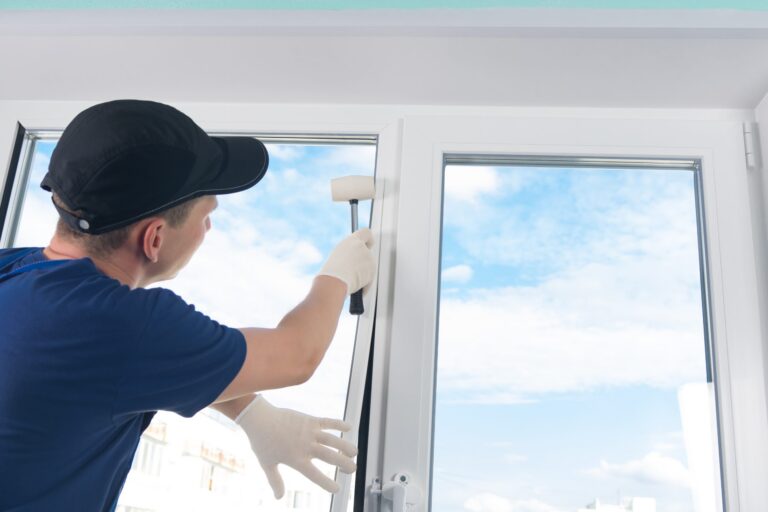
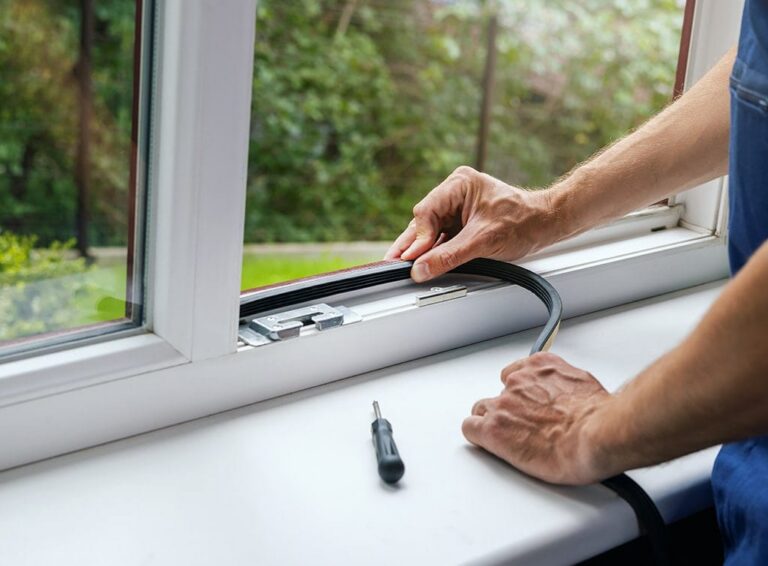
Oversimplification in this domain often ignores the role of the frame and the installation seal. No matter how expensive the glass is, if the frame lacks high-quality EPDM gaskets or if the perimeter is poorly caulked, sound will “leak” around the glass. Investing in a superior installation team and high-grade seals is often a more cost-effective way to achieve the desired result than upgrading to “ultra-thick” glass. When we how to reduce acoustic glazing cost, we are essentially looking for the “weakest link” in the acoustic chain and addressing it with surgical precision rather than brute fiscal force.
Contextual Background: The Evolution of Sound Dampening
Historically, sound insulation in buildings was achieved through mass—thick masonry walls and small, heavy windows. The shift toward the “glass box” aesthetic in the mid-20th century stripped buildings of this natural acoustic buffer. Early attempts at acoustic glazing relied on simply adding more panes (triple glazing), which, while effective for thermal insulation, often created “resonance chambers” that actually amplified certain sound frequencies.
The development of Polyvinyl Butyral (PVB) acoustic interlayers in the 1980s changed the trajectory of the industry. These “soft” interlayers act as a dampening agent, converting sound energy into trace amounts of heat as the glass vibrates. Today, we are in an era of “targeted acoustics,” where digital modeling allows us to predict how a specific glass assembly will react to the ambient noise of a specific street corner before the glass is even manufactured.
Conceptual Frameworks and Acoustic Mental Models
When evaluating acoustic investments, these mental models help filter the signal from the noise:
-
The Law of Mass: Doubling the mass of the glass typically results in a 6-decibel (dB) reduction. This model reminds us that thickness is the most honest, but also the heaviest and most expensive, path to silence.
-
The “Coincidence Effect” Model: Every piece of glass has a frequency at which it becomes “transparent” to sound. This framework guides us to use lamination or asymmetry to push that coincidence dip outside the range of audible noise.
-
The “Air Gap” Framework: Understanding that the space between panes is a spring. A wider gap provides better low-frequency insulation, allowing for thinner (cheaper) glass to be used if the frame can accommodate the depth.
Material Variations and Economic Trade-offs
Evaluating different glass assemblies requires balancing material cost against acoustic performance (measured in dB reduction).
| Assembly Type | Mechanism | Cost Profile | Best Use Case |
| Standard Monolithic | Mass only | Low | Minimal noise areas |
| Asymmetric IGU | Resonance disruption | Moderate | General urban traffic |
| Acoustic Laminated | Dampening (PVB) | High | Flight paths / High-stress |
| Triple Glazing | Multi-cavity | Premium | Thermal + Acoustic needs |
| Vacuum Insulated (VIG) | Vacuum decoupling | Ultra-Premium | Thin-profile heritage sites |
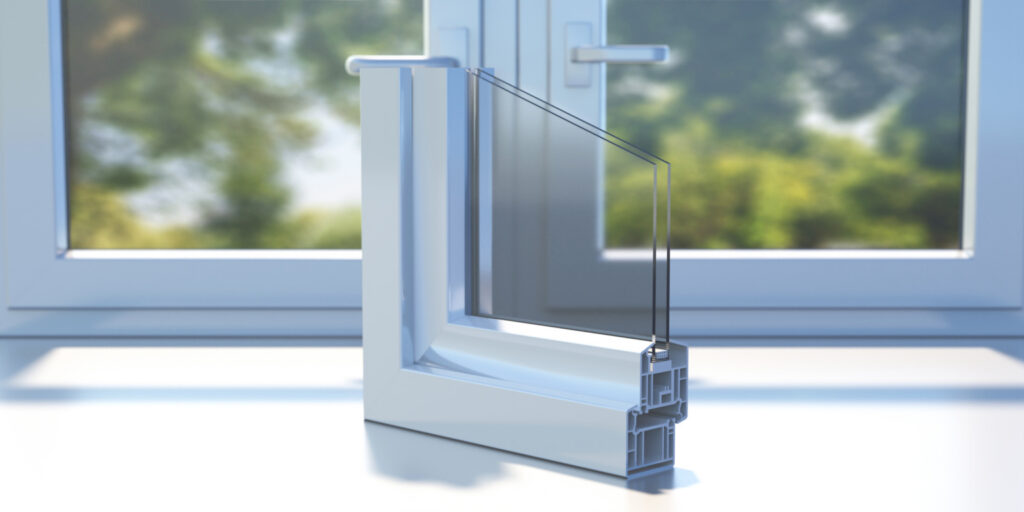
1. Asymmetric Insulated Glazing Units (IGUs)
By varying the pane thickness (e.g., 8mm + 5mm), you disrupt the sound wave without the premium price of acoustic interlayers. This is often the “sweet spot” for mid-tier residential projects.
2. Acoustic Laminated Glass
Uses a specialized, softer interlayer. While the glass itself is more expensive, it allows for thinner overall units, which can save money by fitting into standard, less expensive window frames.
Detailed Real-World Scenarios How to Reduce Acoustic Glazing Cost
Scenario A: The High-Rise Near an Airport
High-frequency jet noise requires the dampening properties of acoustic lamination. However, to optimize cost, the developer might only specify the “flight path” facing elevations for acoustic lamination, while using standard asymmetric units on the shielded side of the building.
Scenario B: The Ground-Floor Office in a City Center
Low-frequency bus and truck rumble is the issue. Here, the plan focuses on the “air gap.” Increasing the gap between panes from 12mm to 20mm can provide a 3dB jump in performance without adding a single cent to the glass material cost, provided the frame profile is deep enough.
Planning, Cost, and Resource Dynamics
The specialized nature of acoustic glass means that logistics and handling often represent a hidden 15-20% of the total cost.
| Resource Category | Direct/Indirect Impact | Variability Factor |
| Laminated Interlayers | Direct | Standard PVB vs. Acoustic PVB |
| Pane Thickness | Direct | Weight-related hardware costs |
| Installation Labor | Indirect | Sealing precision and gasketry |
| Frame Customization | Indirect | Capacity for deep IGU pockets |
Tools, Strategies, and Support Systems
-
Acoustic Simulation Software: Allows for the “virtual testing” of different glass makeups against site-recorded noise.
-
Sound Level Meters (Class 1): Used to establish a baseline decibel map of the site to prevent over-specification.
-
Compression Gaskets: Utilizing EPDM instead of low-grade rubber to ensure the acoustic seal doesn’t degrade within five years.
-
Acoustic Sealants: Non-hardening caulks that maintain their density and flexibility, preventing “sound leaks” at the perimeter.
Risk Landscape and Failure Modes
The “Flanking Path” is the primary risk to any acoustic glazing investment. This occurs when sound travels through the walls, floor, or ventilation ducts, bypassing the expensive glass entirely. If the building’s facade is not also acoustically treated, the most expensive windows in the world will not provide a quiet interior.
Another failure mode is “Resonance Coupling.” If the air gap between two panes is too small (e.g., 6mm), the air acts as a rigid link, transferring vibrations directly from the outer pane to the inner pane. This can lead to a window that is actually louder than a single thick pane of glass.
Governance, Maintenance, and Long-Term Adaptation
Acoustic performance is not a permanent state; it is tied to the integrity of the seals.
-
Checklist for Review:
-
Inspect all perimeter caulking for shrinkage or cracking.
-
Check that the window “closers” are pulling the sash tightly against the gaskets.
-
Verify that no new “flanking paths” (such as new air conditioning vents) have been cut into the wall.
-
Common Misconceptions and Industry Myths
-
“Triple glazing is the best for noise.” Not necessarily. If the three panes are the same thickness, they can create a resonance effect that is worse than double glazing.
-
“Vacuum glass is silent.” While a vacuum cannot conduct sound, the “micro-pillars” that keep the glass apart in VIG units do conduct vibrations, meaning they perform similarly to laminated glass.
-
“Expensive glass fixes everything.” Acoustic comfort is a system-wide achievement. Glass is only 50% of the equation; the frame and the wall construction make up the rest.
Conclusion
The pursuit of silence within the built environment does not have to be a journey of unchecked expenditure. By applying a sophisticated, frequency-based approach to glass selection, architects and owners can find the optimal intersection of performance and value. The most effective way to address the question of how to reduce acoustic glazing cost is to replace broad assumptions with empirical site data. When we move away from “off-the-shelf” solutions and toward a strategic, asymmetric, and system-oriented philosophy, we can achieve a sanctuary of quiet without a premium that compromises the project’s viability.