Top Common Frameless Glass Mistakes: A Definitve Editorial Guide
The adoption of frameless glass in modern architecture represents a pursuit of visual minimalism that challenges traditional structural dependencies. By removing the literal and figurative safety net of aluminum or steel perimeter framing, the glass transitions from an infill material to a primary structural component. Top Common Frameless Glass Mistakes. This shift is not merely aesthetic; it fundamental alters how loads are distributed, how thermal expansion is managed, and how safety is perceived. When the boundary between a living space and the environment becomes invisible, the engineering behind that transparency must become exceptionally robust.
Precision is the non-negotiable currency of frameless systems. In standard framed glazing, the sash and frame provide a margin of error—small miscalculations in measurement or slight out-of-plumb walls can be masked by gaskets and trim. In a frameless environment, a three-millimeter discrepancy is not a hidden flaw; it is a point of mechanical stress that can lead to spontaneous shattering or structural misalignment. The complexity of these systems lies in their apparent simplicity, where every hinge, channel, and silicone joint carries an outsized responsibility for the system’s longevity.
Despite the proliferation of minimalist design, the industry continues to grapple with a high rate of avoidable failures. These issues range from improper hardware specification to a fundamental misunderstanding of glass physics under varied climatic loads. Addressing these challenges requires a move away from “off-the-shelf” thinking and toward a bespoke engineering mindset. This article examines the systemic causes of failure, providing a comprehensive framework for identifying and mitigating the errors that compromise these sophisticated architectural features.
Understanding “common frameless glass mistakes”
To categorize common frameless glass mistakes is to recognize that failure is rarely the result of a single catastrophic event. Instead, it is usually the culmination of small, compounding oversights during the design and installation phases. A frequent misunderstanding is the belief that “heavier is always better.” While thicker glass offers higher resistance to wind loads, it also places immense strain on the structural substrate and the hardware pivots. If the mounting surface cannot support the static load of half-inch tempered glass, the system is destined for mechanical failure regardless of the glass quality.
Oversimplification also occurs in the assessment of environmental factors. Frameless systems are often specified based on interior aesthetics without sufficient consideration for the “bellows effect”—the subtle movement of a building caused by pressure differentials. Without a frame to absorb these micro-movements, the glass must rely entirely on the elasticity of the structural silicone or the tolerances of the mechanical fixings. When these tolerances are ignored, the glass is subjected to “edge-pinching,” a primary cause of spontaneous breakage.
Furthermore, many errors stem from a lack of horizontal coordination between the architect, the glass fabricator, and the hardware manufacturer. A hinge might be rated for a specific weight, but if that weight is distributed across an ultra-wide pane that exceeds the hinge’s torque capacity, the door will sag. This mismatch between component capability and architectural ambition is the hallmark of poorly executed frameless projects.
Deep Contextual Background: The Evolution of Frameless Glazing
The journey toward frameless systems began with the development of the “Pilkington Planar” system in the 1960s, which pioneered the use of bolt-fixed glazing. Before this, glass was always a secondary element supported by a continuous perimeter. The move toward point-supported glass was driven by a desire for “dematerialization”—the architectural goal of making the building envelope as unobtrusive as possible.
As glass manufacturing evolved from standard annealed sheets to high-strength tempered and heat-soaked varieties, the possibilities for frameless applications expanded. We transitioned from simple shower doors to massive, multi-story glass fins and structural balustrades. However, this evolution outpaced the general knowledge of many installers. The “legacy” mindset of glazing, which relies on heavy frames to provide structural integrity, remains a hurdle. Modern frameless systems require a different set of skills: laser-precision leveling, an understanding of torque-load distribution, and a deep knowledge of chemical compatibility between sealants and interlayer films.
Conceptual Frameworks and Mental Models
1. The Cantilever Constraint
In frameless balustrades, the glass acts as a cantilever. The strength of the entire system is dependent on the “moment arm”—the force applied at the top rail relative to the fixity at the base. Planners must visualize the glass not as a wall, but as a lever. Small movements at the base are amplified at the top, making the rigidity of the mounting channel the single most important variable.
2. The Thermal Expansion Coefficient
Glass expands and contracts at a different rate than the steel or concrete it is attached to. A successful frameless design utilizes a “floating” mental model, where the glass is held securely but is allowed microscopic movement within its fixings to prevent stress buildup during temperature swings.
3. The Redundancy Principle (Fail-Safe vs. Fail-Soft)
When glass fails, how does it fail? Tempered glass shatters into small cubes (fail-soft for safety), but it loses all structural integrity immediately. Laminated glass, however, stays in place even when cracked (fail-safe). Choosing the wrong “fail” profile for the specific application is a recurring theme in architectural errors.
Hardware and Material Variations
The choice of hardware is often where the budget meets the reality of physics. Subtle differences in metal composition can lead to catastrophic results in specific environments.
| Component Type | Material Choice | Trade-off | Ideal Application |
| Spigots/Clamps | Duplex 2205 Stainless | High cost; extreme corrosion resistance | Coastal or high-moisture areas |
| U-Channels | Anodized Aluminum | Rigid but less aesthetic than hidden fixings | Commercial base-mounts |
| Point Fixings | 316 Grade Stainless | Requires precision drilling; high stress at holes | High-end facades |
| Structural Silicone | High-Modulus | Strong bond but less flexible | Permanent glass-to-glass joints |
Decision Logic for Glass Specification
The logic should follow a path of: Location > Risk Profile > Code Requirement > Aesthetic. In a high-traffic retail environment, the risk profile dictates laminated glass to prevent a “hole” in the building envelope if breakage occurs. In a private residential shower, tempered glass is the standard for cost and safety. Diverging from this logic to save money is one of the most common frameless glass mistakes.
Detailed Real-World Scenarios Top Common Frameless Glass Mistakes
Scenario 1: The Sagging Glass Door
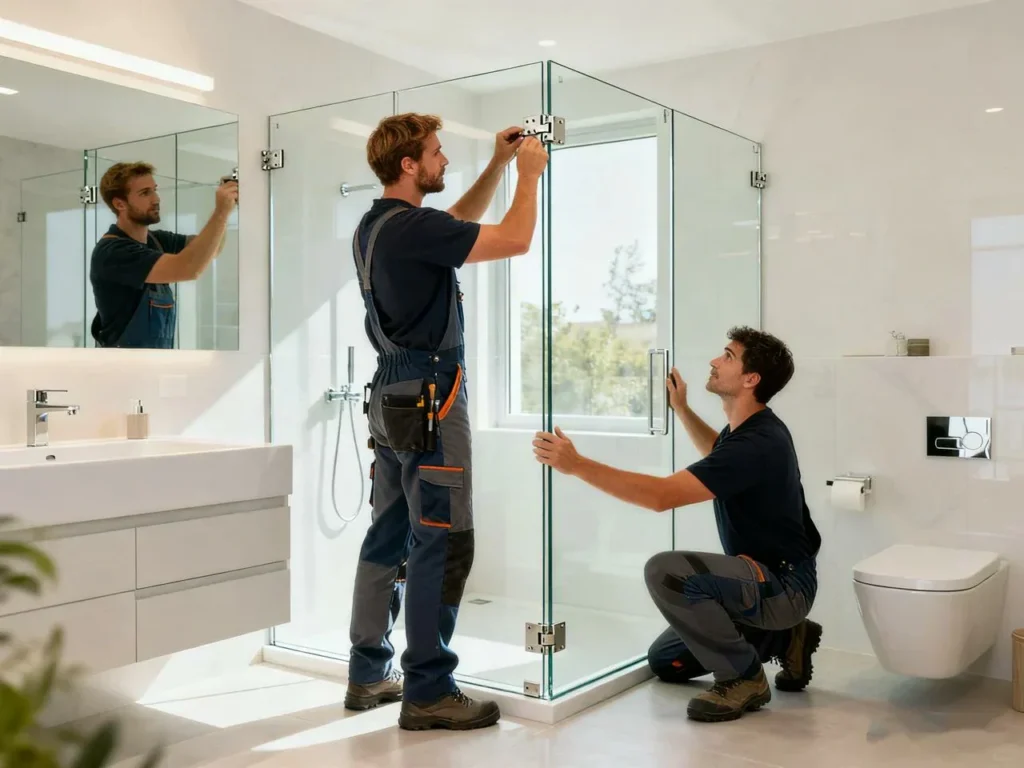
A large frameless entry door begins to scrape the floor within six months. The failure mode was a mismatch between the glass weight (12mm thickness) and the floor spring’s weight capacity. The second-order effect was the misalignment of the top pivot, which eventually led to a hairline crack around the hinge cutout.
Scenario 2: Spontaneous Balustrade Explosion
A tempered glass balustrade shatters on a calm, 70-degree day. The cause was “nickel sulfide inclusion,” a microscopic impurity in the glass. While unavoidable at the manufacturing level, the planning error was failing to specify “heat-soaking,” a process that forces compromised panes to break in the factory rather than on-site.
Scenario 3: Sealant Discoloration and Delamination
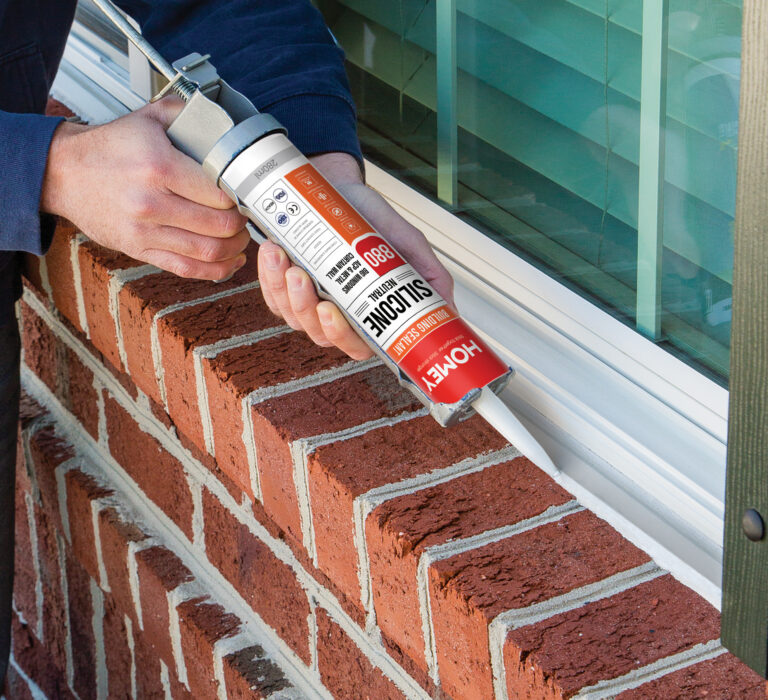
A frameless glass-to-glass corner turns yellow and begins to separate. The failure was the use of an acidic cure silicone on a laminated glass edge. The chemicals in the silicone reacted with the PVB interlayer, leading to a permanent aesthetic and structural failure.
Planning, Cost, and Resource Dynamics
The economics of frameless glass are heavily skewed toward labor and precision rather than raw material.
| Element | Direct Cost | Indirect/Opportunity Cost |
| Heat-Soak Testing | 10–15% markup | Prevents $5,000+ emergency replacement cost |
| Laser Surveying | $500–$1,500 | Prevents re-ordering custom panes due to fit error |
| Polished Edges | $5–$12 per linear foot | Critical for reducing stress points on frameless units |
| Cranage/Lifting | $1,000+ per day | Essential for large panes to prevent edge-chipping |
A common planning error is underestimating the “lead time” for custom-tempered glass. Unlike framed windows, which can sometimes be adjusted on-site, a frameless pane that is incorrectly sized by even 2mm must be completely discarded and re-manufactured, doubling both the cost and the project timeline.
Tools and Support Systems
-
Laser Levels (Self-Leveling): Traditional bubble levels are insufficient for spans over two meters.
-
Torque Wrenches: Essential for point-fixings to ensure that the pressure applied to the glass is within the manufacturer’s specification to avoid crushing the gaskets.
-
Shore Hardness Testers: Used to verify the density of rubber gaskets; too soft and the glass will shift; too hard and it creates a pressure point.
-
Suction Vacuum Lifters: Manual handling of frameless glass is a leading cause of “micro-chipping” on the edges, which eventually leads to full-pane failure.
-
Glass Stress Analyzers: Portable polariscopes can detect areas of high internal stress in installed panes before they result in breakage.
Taxonomy of Risk and Failure Modes
Risks in frameless systems are often compounding. A minor installation error in a high-wind zone becomes a major structural threat.
-
Point-Load Concentration: Occurs when metal makes direct contact with glass without a gasket.
-
Hydrostatic Pressure: In outdoor channels, if water cannot drain, it freezes and expands, cracking the glass at the base.
-
Chemical Incompatibility: The “hidden” risk where cleaners or sealants degrade the integrity of structural bonds over 5–10 years.
-
Inadequate Substrate: Fixing heavy glass to thin-walled aluminum or rotted timber.
Governance, Maintenance, and Long-Term Adaptation
A frameless system requires a structured review cycle. Because there is no frame to hold the glass in place if a fixing fails, the “governance” of the system is vital.
-
Quarterly Hardware Audit: Check for “creep” in hinges or loose bolts in spigots.
-
Gasket Monitoring: UV radiation eventually makes rubber brittle. Gaskets should be inspected for cracks every 24 months.
-
Silicone Integrity: Look for “white-rot” or bubbling in structural silicone joints, which indicates moisture ingress.
Measurement, Tracking, and Evaluation
Evaluating the success of a frameless installation involves tracking both structural stability and aesthetic performance.
-
Deflection Testing: Measuring how much a glass fin or balustrade moves under a standard 0.75kN load. Excessive movement indicates inadequate fixity.
-
Acoustic Seal Verification: Using a decibel meter to ensure that frameless partitions are meeting their sound-dampening targets.
-
Optical Distortion Analysis: Checking for “roller wave” distortion in tempered glass, which can ruin the “invisible” effect of the installation.
Common Misconceptions and Oversimplifications
-
Myth: Frameless glass is “fragile.” Correction: Properly engineered structural glass is often stronger than the frames it replaces.
-
Myth: Silicone can fix any gap. Correction: Silicone is a sealant, not a structural “filler” for poor measurements.
-
Myth: Laminated glass is always safer than tempered. Correction: Laminated glass can sag over time if not supported correctly; tempered is often better for vertical rigidity.
-
Myth: Standard “316” stainless won’t rust. Correction: In salt-spray environments, even 316 will tea-stain without regular passivation or the use of higher-grade Duplex steel.
Conclusion: The Discipline of Transparency
The recurring theme across all common frameless glass mistakes is the underestimation of the engineering discipline required to achieve a “simple” look. Minimalist design does not imply minimal effort; in fact, the opposite is true. The absence of a frame removes the ability to hide flaws, meaning every calculation, every measurement, and every material choice must be executed with absolute precision.
Achieving a durable, safe, and beautiful frameless glass installation requires a synthesis of material science and architectural foresight. By acknowledging the structural realities of glass and respecting the limits of the hardware that supports it, designers and owners can ensure that their pursuit of transparency does not lead to a compromise in integrity. The goal is a system that remains as invisible in its maintenance needs as it is in its visual presence.