How to Manage Glass Delamination Risks: A Definitive Engineering
The phenomenon of delamination in laminated architectural glass represents a sophisticated failure of material adhesion that extends far beyond mere aesthetic clouding. At its core, delamination is the physical separation of the glass lites from the polymeric interlayer—typically Polyvinyl Butyral (PVB) or SentryGlas (SGP)—often initiated by moisture ingress, chemical incompatibility, or mechanical stress. How to Manage Glass Delamination Risks. While laminated glass is prized for its safety and acoustic properties, the invisible chemistry holding these layers together is surprisingly susceptible to environmental degradation if the edge conditions are not meticulously managed.
Architectural trends favoring exposed-edge glazing have exacerbated these vulnerabilities. In traditional captured glazing, the frame provides a protective barrier and a drainage path that keeps the glass edge dry. Modern minimalist designs, however, often leave these sensitive edges vulnerable to the elements, stagnant water, and aggressive cleaning agents. When the seal at the edge fails, capillary action draws moisture into the interlayer, leading to the characteristic “snowstorm” effect or “bubbling” that signals a loss of structural and optical integrity.
Addressing these issues requires a transition from reactive maintenance to a regime of preventive material science. Because the process of delamination is often irreversible once a certain threshold is crossed, the focus must be on the intersection of design geometry, sealant selection, and climatic resilience. This article explores the systemic complexities of interlayer bonding and provides a rigorous framework for professionals seeking to preserve the longevity of high-value glazing assets.
Understanding “how to manage glass delamination risks”
To effectively address how to manage glass delamination risks, one must first dismantle the misconception that delamination is solely a manufacturing defect. While “edge bubbles” can indeed stem from improper autoclaving or contaminated glass surfaces during fabrication, the majority of field failures are environmental. Understanding this risk involves a multi-perspective view: the chemist sees a breakdown in hydrogen bonding; the glazier sees a drainage failure; and the owner sees a depreciating asset.
A common misunderstanding is that all laminated glass is equally susceptible. In reality, the risk profile changes dramatically based on the interlayer material. PVB, the industry standard for decades, is hygroscopic—it naturally attracts water. SGP (ionoplast), by contrast, is much more resistant to moisture but introduces higher stiffness, which can lead to different stress concentrations at the fixings. Oversimplification occurs when planners specify “laminated glass” without defining the specific interlayer chemistry required for the local humidity and UV exposure levels.
Managing these risks requires a “holistic edge” strategy. This means recognizing that the glass edge is a living interface. If a structural silicone sealant is incompatible with the PVB interlayer, a chemical reaction will occur, liquefying the plasticizer and triggering delamination. Thus, the management of this risk is less about the glass itself and more about the compatibility of the surrounding chemical ecosystem.
Deep Contextual Background: The Evolution of Interlayer Technology
The history of laminated glass began accidentally in 1903 when French chemist Édouard Bénédictus dropped a cellulose nitrate-coated flask that cracked but stayed together. This led to the development of “Triplex” glass, which saw widespread use in automobile windshields. However, early cellulose-based interlayers were notoriously unstable, yellowing and delaminating within years of exposure to sunlight.
The introduction of Polyvinyl Butyral (PVB) in the late 1930s revolutionized the industry, offering superior clarity and adhesion. For half a century, PVB was the unchallenged gold standard. The shift toward architectural “high-performance” glazing in the 1990s, however, demanded interlayers that could provide structural support, not just safety. This birthed ionoplast interlayers and EVA (ethylene-vinyl acetate). Each step in this evolution solved one problem—such as moisture resistance or structural stiffness—while introducing new nuances in how the edges must be treated. Today, the challenge is no longer just making the glass stay together; it is ensuring the bond survives 30 years of acidic rain, high-pressure cleaning, and extreme thermal cycling.
Conceptual Frameworks and Mental Models
1. The Capillary Gatekeeper Model
Visualize the edge of a laminated pane as a gatekeeper. If the gate (the sealant or frame) fails, capillary action acts as a pump, forcing moisture into the interlayer. The primary goal of delamination management is to ensure this “gate” is never submerged in standing water.
2. The Chemical Compatibility Matrix
This framework posits that no component in a glazing system exists in isolation. Every gasket, setting block, and sealant must be vetted against the interlayer’s specific chemical requirements. One “rogue” sealant can ruin an entire facade.
3. The Thermal Gradient Stress Model
Glass expands at a different rate than the interlayer. In high-heat environments, the interlayer becomes more fluid, while the glass remains rigid. This creates shear stress at the bond line. Management involves calculating the thermal load to ensure the interlayer’s “glass transition temperature” (Tg) is not frequently exceeded.
Interlayer Variations and Trade-offs
Choosing the right interlayer is the first technical decision in mitigating failure.
| Interlayer Type | Moisture Resistance | Structural Stiffness | Trade-off |
| Standard PVB | Low (Hygroscopic) | Low | Cost-effective; requires edge protection |
| Structural PVB | Moderate | High | Improved stiffness; still sensitive to moisture |
| Ionoplast (SGP) | High | Extremely High | High cost; requires specific hardware tolerances |
| EVA | High | Low | Excellent for decorative/outdoor; less structural |
Decision Logic for Interlayer Selection
The path to durability starts with: Exposure Level > Structural Requirement > Aesthetic Demand. If a pane is to be used as a frameless glass fin in a humid coastal environment, ionoplast is the only logical choice. Using standard PVB in this scenario is a fundamental planning error.
Detailed Real-World Scenarios How to Manage Glass Delamination Risks
Scenario 1: The Submerged Base Channel
In a luxury mall, frameless glass balustrades were set into U-channels. Over two years, the base of the glass developed massive white clouds. The failure was a lack of weep holes in the channel; the glass edges were essentially “living” in a puddle of cleaning water and condensation.
Scenario 2: The Incompatible Silicone Reaction
A high-rise used laminated glass with a butt-joint detail. The glazier used a generic acidic-cure silicone to save costs. Within 18 months, the edges of every pane began to delaminate as the acid migrated into the PVB, breaking the molecular bond.
Scenario 3: The High-Altitude Thermal Burst
In a high-altitude project, the extreme UV and rapid temperature swings caused the interlayer to expand more rapidly than the glass. Without sufficient edge clearance in the frame, the glass “pinched” the interlayer, creating mechanical delamination at the corners.
Planning, Cost, and Resource Dynamics
The economics of delamination are heavily weighted toward prevention. The cost of replacing a single delaminated pane in a curtain wall can be ten times the original cost of the glass when factoring in crane rentals and site labor.
| Mitigation Strategy | Upfront Cost Increase | Risk Reduction |
| Heat-Soak Testing | 10–15% | Reduces spontaneous breakage (not delamination directly) |
| SGP Interlayer Upgrade | 30–50% | High (Essential for exposed edges) |
| Edge Enamel/Frit | 5–10% | Protects bond from UV degradation |
| Compatible Sealant Audit | Negligible | Critical (Highest ROI) |
Tools, Strategies, and Support Systems
-
Edge Sealers: Specialized coatings applied to the raw edge of the glass to provide a secondary moisture barrier.
-
Compatibility Testing (ASTM C1087): The industry standard for ensuring sealants don’t react with interlayers.
-
Infrared Thermography: Used to detect moisture pockets within the interlayer before they become visible to the naked eye.
-
Setting Block Precision: Using high-durometer blocks that don’t compress and block the drainage path.
-
Laser-Level Drainage Audit: Ensuring that horizontal glazing members have the required slope to prevent water ponding.
Risk Landscape and Failure Modes
Delamination risks are rarely isolated; they are often a “taxonomy of compounding errors.”
-
Environmental Loading: Persistent humidity combined with high UV.
-
Mechanical Loading: Constant vibration or wind-sway that “tugs” at the bond.
-
Geometric Risk: Sharp corners or complex cutouts where the interlayer cannot be evenly pressurized during autoclaving.
-
Processing Failure: Improper “nip-rolling” that leaves micro-air pockets at the center of the pane.
Governance, Maintenance, and Long-Term Adaptation
To effectively manage long-term assets, a “layer-based” checklist is required:
-
Quarterly Drainage Audit: Ensure weep holes are clear of debris and insects.
-
Annual Sealant Inspection: Look for “cohesive failure” where the sealant pulls away from the glass.
-
Edge Clouding Log: Document the growth of any visible delamination. If it exceeds 1/4 inch from the edge, structural reassessment may be needed.
-
Cleaning Protocol Governance: Strictly prohibiting the use of high-pressure washers on exposed glass edges.
Measurement, Tracking, and Evaluation
Evaluation is based on “leading” versus “lagging” indicators:
-
Leading Indicator: Sealant adhesion strength and drainage flow rate.
-
Lagging Indicator: Visible “bubbles” or “snowflakes” (delamination has already occurred).
-
Documentation Example: Maintain a “Chemical Log” of every substance that has touched the glass edge during construction and maintenance.
Common Misconceptions and Oversimplifications
-
Myth: Laminated glass is “waterproof.” Correction: It is water-resistant, but the interlayer bond is chemically vulnerable to prolonged moisture.
-
Myth: Delamination is only aesthetic. Correction: In structural applications (fins, floors), delamination reduces the shear-transfer capability, potentially leading to structural collapse.
-
Myth: You can “inject” resin to fix delamination. Correction: This is usually a temporary cosmetic fix and does not restore the original structural bond.
-
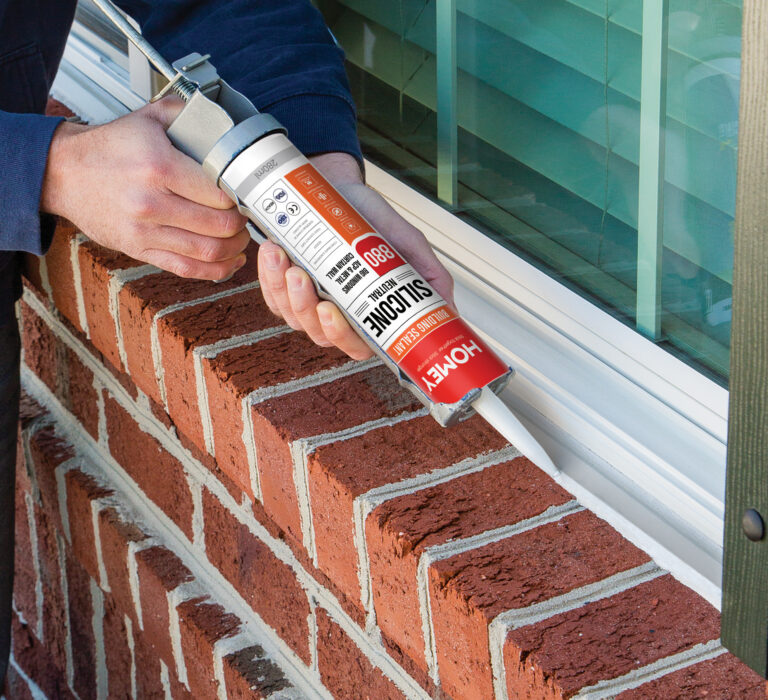
Myth: All silicones are safe for glass. Correction: Many silicones contain solvents or acids that aggressively attack specific interlayers.
Conclusion
The discipline required for how to manage glass delamination risks is a testament to the complexity of modern architecture. Transparency is not a passive state; it is a hard-won result of chemical and mechanical harmony. By treating the glass edge as the most critical component of the system—rather than an afterthought—engineers and owners can ensure that the “invisible” bond remains strong. Success in this domain is measured by the absence of change: when a glass facade looks the same after twenty years as it did on the day of installation, the management strategy has succeeded.