Top Sustainable Glazing in America: A Definitive Technical Guide
The integration of high-performance glass into the American built environment has moved far beyond the binary choice of insulation versus aesthetics. As building codes tighten—driven by local mandates like New York’s Local Law 97 or California’s Title 24—the glazing industry has transitioned into a phase of deep technical specialization. Top Sustainable Glazing in America. The challenge is no longer just keeping heat in or out; it is about managing the entire electromagnetic spectrum while maintaining structural integrity and carbon accountability.
Within the United States, the definition of sustainability in glazing is currently undergoing a radical shift. It is shifting from “operational carbon” (the energy a window saves during its life) to include “embodied carbon” (the energy required to mine, manufacture, and transport the glass). This dual-focus creates a complex decision-making landscape for architects and developers. A window that is highly efficient over fifty years might carry such a heavy manufacturing footprint that its net benefit is neutralized for the first two decades of its existence.
Achieving a high-authority understanding of the market requires looking past the marketing gloss of “green” building. It requires an analysis of the chemical vapor deposition (CVD) processes used for coatings, the gas-retention capabilities of spacer systems, and the structural limitations of vacuum-insulated units. This article provides a comprehensive examination of the systems and strategies currently defining the frontier of the glass industry in North America.
Understanding “top sustainable glazing in america”
To define top sustainable glazing in america, one must first decouple “sustainability” from simple energy efficiency. In the American context, where climate zones vary from the sub-arctic conditions of Fairbanks to the tropical humidity of Miami, there is no monolithic “best” product. Instead, top-tier glazing represents a bespoke response to a specific solar and thermal orientation.
The Multi-Perspective Definition
From the perspective of a structural engineer, sustainable glazing is about durability—reducing the frequency of replacement cycles. For a mechanical engineer, it is about reducing the peak cooling load to downsize HVAC equipment. For a sustainability consultant, it involves the Life Cycle Assessment (LCA) of the glass components. Common misunderstandings often arise when these perspectives are not aligned; for instance, a triple-pane unit may be “sustainable” for heat retention but “unsustainable” for a building’s structural load-bearing requirements due to its extreme weight.
The Risk of Oversimplification
A recurring mistake in the domestic market is relying solely on U-factors (heat loss) or Solar Heat Gain Coefficients (SHGC). While these metrics are vital, they fail to account for the “dynamic” nature of modern glass. True sustainability in the American market now involves “tuning” the facade—applying different coatings to different elevations of the same building to optimize for the unique solar path of that specific GPS coordinate.
The Historical Trajectory of Thermal Performance
The American glazing industry remained relatively stagnant for decades, relying on monolithic (single-pane) glass until the energy crises of the 1970s forced the adoption of Insulating Glass Units (IGUs). The subsequent evolution has been marked by three distinct eras:
-
The Insulative Era: The shift from single to double glazing, focusing primarily on trapped air as an insulator.
-
The Coating Era: The development of Low-Emissivity (Low-E) coatings in the 1980s and 90s, which allowed glass to reflect infrared light while remaining transparent.
-
The Systemic Era (Current): The current shift toward “smart” or “integrated” glazing, where the glass functions as part of a building’s active skin, often including integrated photovoltaics or electrochromic layers.
This evolution has been heavily influenced by American manufacturing capabilities. The U.S. remains a leader in high-performance coatings, though it often lags behind European markets in the mass adoption of triple-pane and vacuum-insulated technologies due to lower domestic energy costs and different labor structures.
Conceptual Frameworks: The Physics of Transparency
To evaluate high-performance glass, several mental models are useful for navigating technical trade-offs:
1. The Energy Balance Model
This framework views the window as a valve rather than a wall. Sustainability is measured by the “Net Energy Flow.” In cold climates like Minneapolis, a sustainable window might actually allow more solar gain (higher SHGC) during the winter to offset heating costs, whereas in Phoenix, the same window would be a liability.
2. The “Six Sides” Quality Model
In an IGU, there are multiple glass surfaces (four in a double-pane, six in a triple-pane). The framework involves strategically placing coatings on specific surfaces. A coating on the #2 surface (inside of the outer pane) is best for heat rejection, while a coating on the #4 or #5 surface is best for heat retention.
3. The Embodied-to-Operational Ratio
This model measures the “Carbon Payback Period.” If a high-tech glazing system requires 100 units of energy to produce but only saves 2 units per year compared to a standard unit, the payback period is 50 years—longer than the expected life of the seals. True top sustainable glazing in america must aim for a payback period of under 10 years.
Key Material Categories and Performance Trade-offs
The following categories represent the current state-of-the-art in the American market. Each carries distinct advantages and inherent compromises.
| Category | Primary Benefit | Technical Trade-off | Best Use Case |
| Triple-Pane IGU | Exceptional R-values | Weight and depth (requires heavy framing) | Northern U.S. (Zones 5-7) |
| Vacuum Insulated Glass (VIG) | R-12+ performance in a 10mm profile | High cost; visible “pillars” between panes | Historic retrofits; slim-profile modernism |
| Electrochromic (Smart) | Active glare and heat control | Requires power; slow transition times | West-facing facades; high-end commercial |
| BIPV (Photovoltaic) | Energy generation | Lower transparency; complex electrical integration | Spandrel panels; skylights |
| Bird-Friendly Glazing | Ecological sustainability | Visible patterns can affect aesthetics | Urban flyways (NYC, Chicago) |
Technical Nuance: The Gas Fill
While Argon is the standard for sustainable IGUs in America, Krypton is used when the air space must be thinner (as in VIG or slim IGUs) because of its superior thermal resistance at smaller gaps. However, the leakage rate of these gases—typically 1% per year—means that a “sustainable” window can lose its performance over a 20-year horizon if the spacer technology is inferior.
Real-World Scenarios: Climate-Specific Implementation Top Sustainable Glazing in America
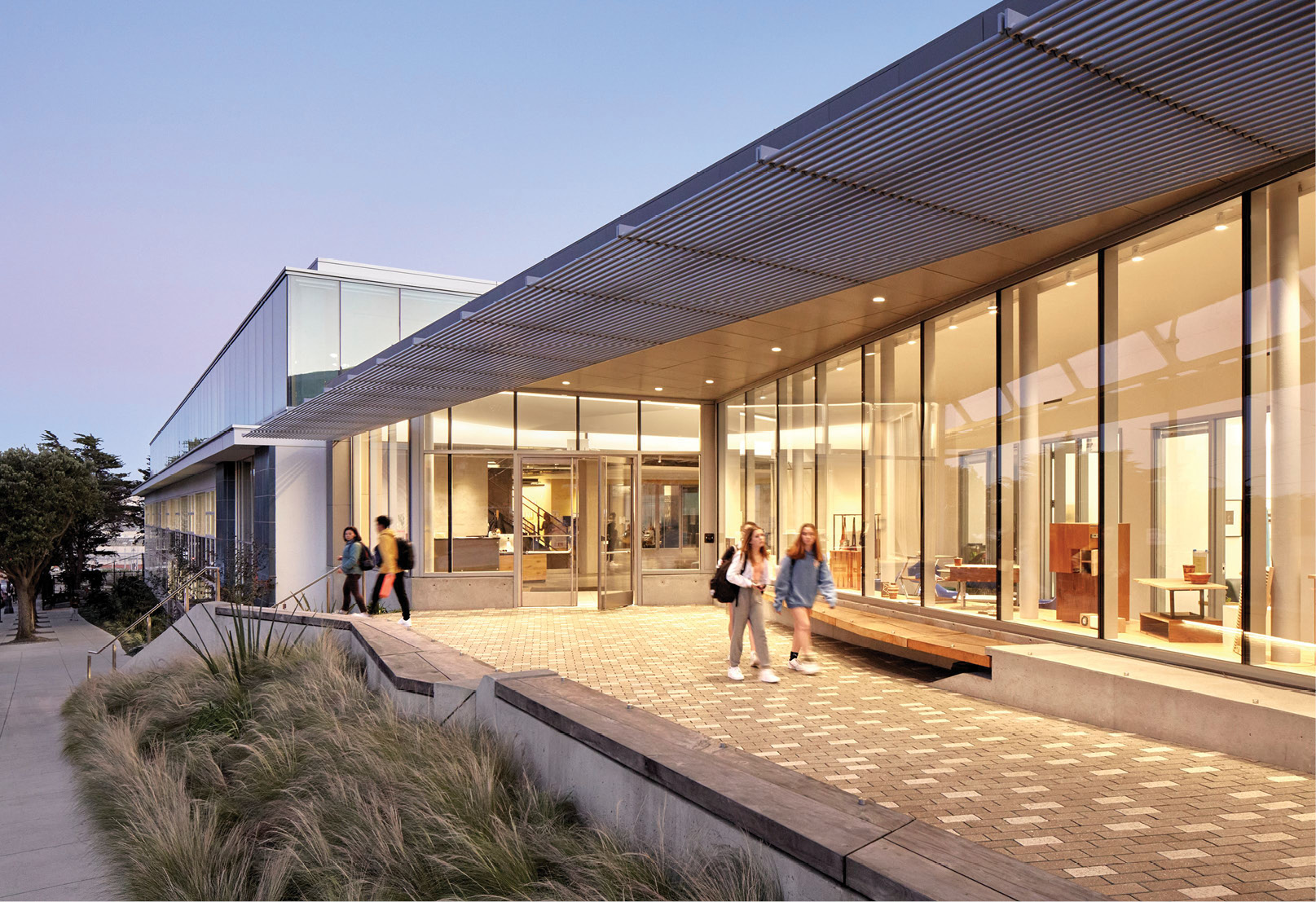
Scenario 1: The Pacific Northwest School
In a rainy, overcast climate like Seattle, the primary goal is daylighting without heat loss.
-
Solution: High-VLT (Visible Light Transmittance) triple-pane glass with a Low-E coating on the #3 surface.
-
Failure Mode: If the SHGC is too low, the building may require more artificial heating in the spring.
Scenario 2: The Southwest Desert Office
In Austin or Phoenix, the challenge is the “Solar Load.”
-
Solution: Spectrally selective double-glazing with a very low SHGC (under 0.25) and tinted or reflective outer lites.
-
Second-Order Effect: Reduced daylighting may increase the use of interior LED lighting, potentially offsetting some HVAC savings.
Scenario 3: The Coastal Hurricane Zone
In Florida, sustainability must include resilience.
-
Solution: Laminated insulating units.
-
Conflict: The heavy laminates increase embodied carbon and weight, requiring more aluminum for the frames, which has a high carbon footprint.
Economic Dynamics: Cost, Value, and Carbon ROI
The financial landscape of sustainable glazing is often distorted by a focus on “First Cost.” However, the true value of top sustainable glazing in america is found in the “Total Cost of Occupancy.”
Direct vs. Indirect Costs
| Component | Estimated Premium | Indirect Benefit |
| Triple Glazing | 15–25% over Double | HVAC downsizing; improved perimeter comfort |
| Vacuum Glazing | 300% over Standard | Avoids facade structural reinforcement |
| Smart Glass | 50–100% over Static | Eliminates need for mechanical blinds/shades |
Opportunity Cost of Low-Performance Glass
Choosing a cheaper, less sustainable glass often leads to “Thermal Discomfort Zones.” This is the 5-to-10-foot area near a window where the glass is so cold (or hot) that the space becomes unusable for office desks or seating. High-performance glazing effectively increases the “rentable square footage” of a building by making the entire floor plate habitable.
Risk Landscape and Systemic Failure Modes
Sustainability is contingent upon longevity. If a window fails in 10 years, it is ecologically catastrophic regardless of its U-factor.
-
Seal Failure (Fogging): The most common failure in IGUs. In the U.S., the shift toward “warm-edge” spacers (using polymers instead of aluminum) has reduced thermal bridging but requires more precise manufacturing to ensure gas retention.
-
Thermal Stress Cracks: High-performance coatings absorb heat. If a pane is partially shaded by a structural fin, the temperature differential across the glass can cause a fracture. This requires a “Thermal Stress Analysis” during the design phase.
-
Optical Distortion: Triple-pane units are prone to “pillowing” or “bowing” due to barometric pressure changes between the factory and the job site. This can create a funhouse-mirror effect on the building exterior.
Governance, Maintenance, and Performance Verification
For a glazing system to remain sustainable, it must be governed by a rigorous lifecycle plan.
Layered Maintenance Checklist
-
Inspection (Every 2 Years): Check perimeter caulk and gaskets. A sustainable window is useless if air is leaking around the frame.
-
Cleaning Protocols: Low-E coatings on the #4 surface (interior) are susceptible to scratching. Maintenance teams must use ionized water or specific non-abrasive tools.
-
Sensor Calibration: For electrochromic or automated shade systems, the light sensors must be cleaned and recalibrated annually to ensure they are triggering at the correct lux levels.
Monitoring Adjustment Triggers
Buildings equipped with BMS (Building Management Systems) should track the temperature of the interior glass surface. If the surface temperature begins to align with the exterior temperature, it indicates a loss of insulating gas or a breached seal.
Common Misconceptions and Industry Myths
-
“Triple-Pane is Always Better”: In moderate climates, the extra carbon cost of manufacturing and shipping a third pane of glass may never be offset by the marginal energy savings.
-
“Low-E Makes Glass Dark”: Modern “spectrally selective” coatings allow for very high transparency while still blocking significant amounts of infrared and UV light.
-
“Residential and Commercial Glass are Interchangeable”: Commercial glazing must handle much higher wind loads and thermal movements. Using residential-grade sustainable products in a commercial setting often leads to premature structural failure.
-
“R-Value is the Only Metric”: In the U.S. south, the Solar Heat Gain Coefficient (SHGC) is significantly more important for sustainability than the R-value.
Conclusion
The pursuit of the top sustainable glazing in america is an exercise in balancing the paradoxical requirements of modern architecture. It is no longer sufficient for glass to be a passive barrier. The frontier of the industry lies in “contextual glazing”—systems that are engineered for the specific orientation, climate, and carbon goals of a single project.
The future of American glazing will likely be defined by the refinement of Vacuum Insulated Glass and the integration of carbon-neutral manufacturing processes. For the architect and developer, the path forward requires a move away from “off-the-shelf” solutions in favor of deeply engineered, lifecycle-focused transparency. Sustainability, in its truest sense, is the marriage of performance with permanence.