The Definitive Guide to Top Urban Glazing Projects USA High-Rise
The American urban skyline is no longer defined by the heavy mass of masonry or the brutalist weight of exposed concrete. Instead, it has become a study in the manipulation of light, transparency, and high-performance membranes. Top Urban Glazing Projects USA. The evolution of the building envelope in major U.S. metropolitan centers represents a sophisticated convergence of material science and structural gymnastics. To view these glass-clad structures merely as aesthetic triumphs is to overlook the complex mechanical and environmental roles they play in the survival of a modern city.
In the current architectural climate, the “skin” of a building is its most critical organ. It must negotiate the relentless pressures of wind loads at extreme altitudes, manage the thermal bridge between a climate-controlled interior and a volatile exterior, and increasingly, serve as a programmable interface for energy generation and occupant wellness. The shift from “punched openings” to full-scale structural glazing has fundamentally altered the relationship between the private interior and the public realm, creating a transparency that is as much a sociological statement as it is an engineering one.
The following analysis moves beyond the surface-level appreciation of high-rise aesthetics to investigate the systemic complexities of the most significant glass-based developments in the country. By examining the logistical, financial, and technical frameworks that govern these installations, we can better understand the current state of urban density and the future of the American built environment.
Understanding “top urban glazing projects usa”
The designation of top urban glazing projects usa often suffers from a narrow focus on height or visual flash. From a senior editorial perspective, true excellence in this category is rarely about the mere application of glass; it is about the mastery of the envelope as a high-performance machine. In the American context, “top” projects are those that successfully navigate the tension between maximum transparency and the increasingly stringent energy codes found in cities like New York, Chicago, and San Francisco.
A common misunderstanding among observers is the belief that these facades are static glass boxes. In reality, the most significant projects utilize “intelligent skins”—multi-layered systems that may include double-skin facades, automated shading, and vacuum-insulated glazing. The risk of oversimplification lies in ignoring the invisible engineering that prevents these buildings from becoming “greenhouses” that would otherwise overwhelm a city’s power grid.
Furthermore, the “urban” component of these projects introduces logistical constraints that are often invisible to the public. To be considered among the best, a project must demonstrate excellence in “just-in-time” delivery of unitized panels within high-density environments, where staging area is non-existent and the margin for error in structural tolerances is measured in millimeters.
Historical and Systemic Context of Urban Transparency
The American obsession with glass-clad urbanism can be traced back to the post-war “International Style.” The Lever House (1952) in New York served as the initial proof of concept for the curtain wall—a non-structural skin that hung from the steel frame. This liberated the facade from load-bearing duties, allowing architects to treat the exterior as a canvas of pure light.
The Shift to Performance
By the 1970s and 80s, the oil crisis forced a reconsideration of the glass box. This led to the development of Low-Emissivity (Low-E) coatings, which remain the backbone of modern urban glazing. The history of these projects is essentially a history of chemistry: the ability to deposit microscopic layers of silver and metal oxides onto glass to reflect heat while allowing visible light to pass through.
The Contemporary Structural Revolution
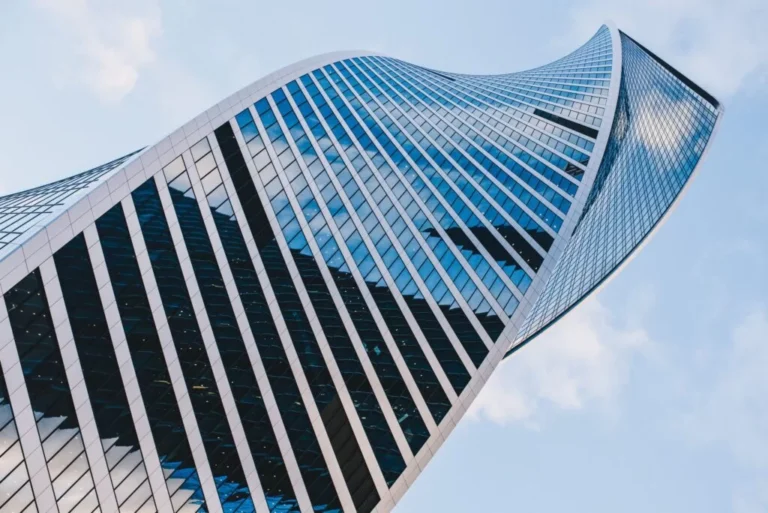
Today, we are seeing the “dematerialization” of the frame. High-strength structural silicones and point-supported glass (the “spider” system) allow for vast expanses of glass without visible mullions. This represents the current frontier: making the building’s skeleton disappear so that the urban project becomes a reflection of the sky itself.
Conceptual Frameworks for Façade Analysis
To analyze a major glazing project, one must look beyond the blueprint and apply specific mental models:
-
The Energy-Balance Framework: This views the facade not as a wall, but as a valve. It measures the trade-off between “Solar Heat Gain” (the heat the glass lets in) and “Visual Light Transmittance” (the light humans need). A successful project finds the equilibrium where the HVAC system and the lighting system work in harmony.
-
The Sequential Assembly Logic: This model analyzes the project through the lens of construction speed. In urban centers, time is the primary cost driver. Projects are evaluated based on how quickly a “unitized” system can be “buttoned up” to allow interior trades to begin work.
-
The Acoustic-Isolation Model: Urban glazing must fight the “city floor”—the constant roar of traffic, sirens, and construction. This framework evaluates a project based on its Sound Transmission Class ($STC$) and Outdoor-Indoor Transmission Class ($OITC$) ratings.
Taxonomy of Systems: Materials, Trade-offs, and Logistics
The diversity of systems found in top urban glazing projects usa can be categorized by their mechanical behavior and installation methods.
| System Type | Primary Benefit | Significant Trade-off | Urban Application |
| Unitized Curtain Wall | Rapid installation; factory-grade quality | High logistical complexity; rigid grid | Supertall skyscrapers |
| Stick-Built System | High field adaptability; lower shipping cost | Labor intensive; weather dependent | Boutique mid-rise; complex geometries |
| Double-Skin Facade | Extreme thermal/acoustic performance | High initial cost; loss of floor area | High-performance institutional |
| Structural Glass Wall | Maximum transparency; “invisible” support | High cost; complex structural engineering | Ground-floor retail; flagship lobbies |
Decision Logic: Stick vs. Unitized
In a dense urban core, the decision is almost always driven by “staging.” Unitized systems allow for panels to be lifted directly from the truck to the floor plate, bypassing the need for scaffolding. However, if the building geometry is highly irregular (curved or faceted), a hybrid or stick-built approach may be required to handle the intricate joints and transitions.
Real-World Scenarios: Performance Under Pressure Top Urban Glazing Projects USA
Scenario 1: The High-Velocity Wind Tunnel
In cities like Chicago, the “Windy City” moniker is a literal engineering constraint. For a skyscraper, the glass at the 80th floor experiences vastly different pressures than at the 10th.
-
Constraint: Preventing “glass flutter” and seal failure under cyclical wind loads.
-
Decision Point: Increasing the thickness of the outer lite vs. using heat-strengthened glass.
-
Result: A “pressure-equalized” rainscreen system that prevents water from being sucked into the building during high-wind storms.
Scenario 2: The Acoustic “Dead Zone”
A luxury residential tower located directly adjacent to a major transit hub (e.g., Grand Central or Chicago Union Station).
-
Constraint: Eliminating the low-frequency rumble of trains.
-
Decision Point: Utilizing varied thicknesses of glass within the IGU (Insulated Glass Unit) to break up sound frequencies.
-
Failure Mode: If the frames are not “decoupled” from the slab, the sound travels through the metal, bypassing the glass entirely.
Economic Dynamics: Costs, Resources, and Lifecycle
The financial planning for a flagship glazing project involves a “triple bottom line” analysis. Direct costs are often deceptive.
| Expense Category | Range (Per Sq Ft of Wall) | Influencing Factors |
| Standard Commercial | $120 – $250 | Standard mullion sizes; standard Low-E |
| High-Performance Unitized | $300 – $600 | Custom extrusions; triple glazing; thermal breaks |
| Specialty / Oversized | $800 – $1,500+ | Jumbo glass (over 10ft); curved glass |
Opportunity Cost: A high-performance facade may cost 25% more upfront but can reduce the building’s total HVAC plant size by 30%. In cities with “Carbon Taxes” (like New York’s Local Law 97), the ROI of a superior glazing system is now calculated in terms of avoided fines over a 20-year horizon.
Tools and Support Systems for Modern Glazing
The success of top urban glazing projects usa relies on a hidden infrastructure of specialized tools:
-
Spider Cranes & Glass Manipulators: Remote-controlled mini-cranes that can operate on the interior floor plate to set glass.
-
Thermal Imaging (Infrared): Used during commissioning to detect “thermal leaks” where the insulation or thermal breaks were improperly installed.
-
BIM (Building Information Modeling): Essential for coordinating the thousands of unique units in a complex facade.
-
Desiccant Management: The “silica gel” hidden in the spacers of glass units that prevents internal fogging.
-
Structural Silicone Sealant: The high-strength “glue” that allows for glass-to-glass joints without metal frames.
The Risk Landscape: Failure Modes and Resilience
-
Nickel Sulfide Spontaneous Breakage: A microscopic impurity in tempered glass that can cause a pane to shatter without warning years after installation.
-
Galvanic Corrosion: Occurs when dissimilar metals (e.g., aluminum and stainless steel) touch without a thermal break, leading to structural degradation.
-
Seal Saturation: If the drainage system (“weeps”) in a facade becomes clogged, the glass seals sit in water, leading to premature fogging and failure.
Governance, Maintenance, and Long-Term Adaptation
A flagship urban project is not “finished” when the ribbon is cut; it is a living system that requires constant monitoring.
The Maintenance Lifecycle
-
Annual Review: Inspecting the “EPDM gaskets” for shrinkage or brittleness.
-
Sealant Testing: Every 10 years, performing “pull tests” to ensure the silicone still adheres to the glass.
-
Building Maintenance Units (BMU): The rooftop cranes used by window washers must be integrated into the building’s structural design from day one.
Evaluation Metrics and Performance Tracking
How is a project’s success tracked after 5 years?
-
Lagging Indicator: The actual energy consumption compared to the “Energy Model” generated during design.
-
Leading Indicator: The number of “thermal comfort” complaints from tenants near the perimeter.
-
Documentation: A “Façade Logbook” that tracks every pane replacement to identify batch-wide manufacturing defects.
Common Misconceptions in Urban Glazing
-
“Triple glazing is always better”: In some climates, the added weight and cost of triple glazing do not provide enough ROI compared to high-performance double glazing.
-
“Glass is a poor insulator”: With vacuum technology, glass can now rival the insulation value of a standard stud wall.
-
“Reflective glass is for privacy”: While it works during the day, it creates a “fishbowl” effect at night where the interior is more visible than the exterior.
-
“Glass buildings are bird killers”: Modern “fritted” glass uses patterns invisible to humans but visible to birds, significantly reducing collisions.
Synthesis and Future Adaptability
The future of top urban glazing projects usa lies in “dynamic” facades. We are moving toward skins that can generate electricity via transparent photovoltaics and adjust their tint automatically based on the sun’s position.
The “iconic” building of the future will not be the one that shines the brightest, but the one that manages its environmental footprint with the most intelligence. As American cities continue to densify, the glass facade will remain our primary tool for balancing the human need for light with the ecological necessity of efficiency.