Compare Frameless Glass Balustrade Plans: A Technical Editorial
The modern architectural obsession with transparency has elevated the frameless glass balustrade from a high-end niche feature to a standard expectation in contemporary design. At its core, the balustrade serves a singular, uncompromising function: life safety. Compare Frameless Glass Balustrade Plans. However, the pursuit of an “invisible” barrier introduces a set of structural contradictions that require meticulous engineering to resolve. When we strip away the traditional posts and handrails, the glass itself becomes the primary structural member, tasked with absorbing wind loads, human impact, and the constant stress of thermal expansion.
Designing these systems is not merely an aesthetic exercise. It involves a sophisticated interplay of material science, specifically the lamination of tempered glass lites, and the mechanics of cantilevered loads. The “plan” is the foundational document that bridges the gap between a visual concept and a code-compliant installation. Without a rigorous framework to evaluate these designs, projects often fall into the trap of prioritizing visual lightness at the expense of structural rigidity or long-term durability.
To effectively navigate this field, one must move beyond the marketing brochures and delve into the specifics of channel depths, interlayer types, and the chemistry of non-shrink grouts. The difference between a stable, lifelong installation and a system that “creaks” or deflects excessively often comes down to the nuances found in the planning phase. This article serves as an editorial deep dive into the technicalities of these systems, providing a reference for those tasked with the critical evaluation of architectural specifications.
Compare frameless glass balustrade plans
To effectively compare frameless glass balustrade plans, one must recognize that a plan is a multi-dimensional set of instructions, not just a drawing. It encompasses the glass specification (thickness and type), the fixing method (base channel, standoff, or spigot), and the substrate compatibility. A common error in the industry is treating these components as interchangeable. In reality, a plan optimized for a concrete balcony in a low-wind residential area will be fundamentally dangerous if applied to a high-rise commercial deck.
Comparing these plans requires a “failure-first” mindset. Instead of looking at how the glass looks in the afternoon sun, the evaluator must ask: “If a 200-pound person falls against the top edge, how does the load transfer to the building’s skeleton?” The complexity arises because glass is an anisotropic material when laminated; it doesn’t always behave predictably under concentrated stress. Furthermore, the “frameless” nature means there is no secondary path for the load—no metal post to catch the glass if the base fails.
Oversimplification in this domain often manifests as a reliance on “standard details.” While manufacturers provide typical drawings, the site-specific plan must account for edge distances in concrete or the torque-retention capabilities of steel bolts. When you compare frameless glass balustrade plans, the superior option is almost always the one that provides the most detailed “load path analysis” and specifies the precise chemical composition of the anchoring agents.
Deep Contextual Background: The Evolution of Transparency
The journey toward the frameless aesthetic began with the development of the “toughening” process, which allowed glass to become four to five times stronger than standard annealed panes. However, the true breakthrough was the evolution of structural interlayers, such as SentryGlas (ionoplast). Unlike traditional PVB (polyvinyl butyral), which is relatively soft, these stiff interlayers allow the glass to remain upright and maintain structural integrity even if both panes of the laminate are broken.
Historically, balustrades were heavy, opaque barriers. The shift to glass was initially met with skepticism by building officials who feared the “brittle failure” characteristic of ceramics. Over the last three decades, the industry has responded with rigorous testing protocols, leading to the sophisticated base-shoe systems we see today. We have moved from “glass as an infill” to “glass as a structural cantilever,” a shift that has redefined the responsibilities of the modern glazier and architect.
Conceptual Frameworks and Mental Models
When evaluating different balustrade strategies, three core mental models help filter complex information:
-
The Lever Arm Logic: View the balustrade as a lever. The height of the glass is the arm, and the base fixity is the fulcrum. The taller the glass, the exponentially higher the stress on the mounting hardware.
-
The “Post-Breakage” Continuity Model: This assumes the glass has already failed. A high-quality plan defines how the system behaves in its failed state—does it sag and provide a temporary barrier, or does it collapse entirely?
-
The Substrate-Centric View: The glass is rarely the point of failure; the substrate is. This model prioritizes the strength of the wood, steel, or concrete to which the balustrade is attached as the primary constraint.
Key Categories and Variations
The following table and subsequent analysis outline the primary mechanical strategies used in modern plans.
| System Type | Mounting Mechanism | Ideal Substrate | Aesthetic Impact |
| Base Channel | Continuous U-profile | Concrete / Steel | Ultra-minimal; “hidden” floor |
| Standoff Pins | Side-mounted bolts | Steel / Timber | Industrial; glass hangs off edge |
| Spigot Systems | Discrete mini-posts | Concrete / Tile | Easy drainage; visible hardware |
| Clamping Plate | Compression gaskets | Steel | High-security; prominent base |
1. The Base Channel (Dry-Fix vs. Wet-Fix)
The base channel is often considered the gold standard for frameless designs. “Dry-fix” systems use specialized plastic wedges to align and secure the glass, allowing for easy adjustment. “Wet-fix” systems use grout. While grout is often cheaper, it is unforgiving; if the glass is not perfectly plumb during the pour, there is no way to fix it without smashing the pane.
2. Side-Fixed Standoffs
These are frequently used when floor space is at a premium. The glass is bolted through the side of the balcony slab. The critical planning point here is the “edge distance” of the holes in the concrete. If the holes are too close to the top of the slab, the concrete may “spall” or break off under the weight of the glass.
Detailed Real-World Scenarios Compare Frameless Glass Balustrade Plans
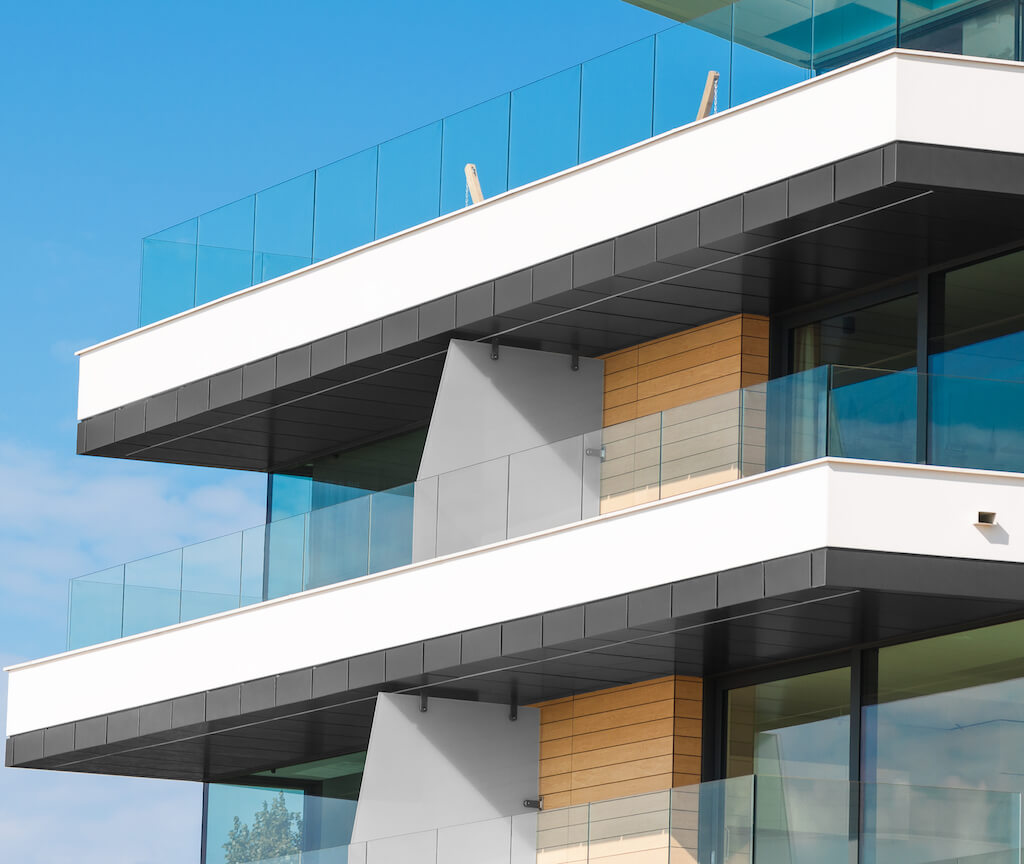
Scenario A: The High-Wind Coastal Balcony
Here, the plan must account for “cyclic loading.” Wind doesn’t just push; it buffets. A plan that uses standard PVB laminate may see the glass “creep” or lean outward over time because PVB softens when warm. The superior plan in this scenario specifies an ionoplast interlayer and a deep-channel base shoe to minimize the “chatter” of the glass against the metal.
Scenario B: The Residential Timber Deck
Timber is a “living” material that expands and contracts. A frameless plan that works for concrete will fail on wood because the bolts will eventually loosen as the wood fibers compress. The plan must include a “spreader plate” on the back of the timber joists to distribute the load across multiple structural members.
Planning, Cost, and Resource Dynamics
The economic analysis of a frameless system must extend into the “hidden costs” of installation. For instance, a base channel system might have a high material cost but a low labor cost due to the speed of the “wedge” alignment. Conversely, standoff pins are cheap to buy but require precision drilling that can triple the labor hours.
| Cost Element | Indirect Factor | Range (Per Linear Foot) |
| Glass (1/2″ to 3/4″ Lam) | Interlayer Type | $150 – $350 |
| Aluminum Base Shoe | Finish (Anodized/Powder) | $80 – $180 |
| Installation Labor | Equipment (Cranes/Suction) | $100 – $300 |
| Structural Engineering | Certification/Stamp | $1,500 – $5,000 (Total) |
Risk Landscape and Failure Modes
The most significant risk in frameless plans is spontaneous breakage due to nickel sulfide (NiS) inclusions. While rare, small impurities in the tempered glass can expand over time, causing the glass to shatter without warning. This is why “Heat Soaking”—a process that artificially ages the glass to trigger failures in the factory—is a non-negotiable part of a high-tier plan.
Another systemic risk is galvanic corrosion. If stainless steel standoffs are used against a carbon steel frame without a nylon isolator, the two metals will trade electrons, leading to rapid rust and structural weakening of the bolts.
Governance and Maintenance
A frameless balustrade is not a “set and forget” feature. A layered maintenance checklist should include:
-
Torque Testing: Checking that standoff bolts haven’t vibrated loose.
-
Gasket Integrity: Ensuring the rubber seals haven’t perished under UV exposure, which would allow water to sit in the base channel.
-
Alignment Review: Monitoring if the “gaps” between glass panels have shifted, which may indicate substrate movement.
Common Misconceptions
-
“Thicker glass is always safer.” Not necessarily. A 1/2″ pane with a structural interlayer is often stronger and more stable than a 3/4″ pane with a standard soft interlayer.
-
“Frameless means no handrail.” Many building codes require a “top rail” or a handrail if the glass is not “fully captured.” This rail serves to keep the panels aligned and provides a secondary barrier if a panel breaks.
-
“Any glazier can install it.” Frameless systems require specialized heavy-lifting equipment and precise leveling tools that general glaziers may not possess.
Conclusion
To compare frameless glass balustrade plans is to engage in a technical audit of safety and structural integrity. The most successful plans are those that acknowledge the limitations of the materials and the volatility of the installation environment. By prioritizing structural interlayers, substrate-specific fixings, and rigorous maintenance schedules, architects and developers can achieve the desired aesthetic of transparency without compromising the fundamental duty of protection. The “best” plan is rarely the one that is the most invisible; it is the one that is most thoroughly engineered for the invisible forces acting upon it.